Water Treatment for Electroplating & Metal Patterning Processes
In semiconductor fabrication and high‑density electronics packaging, plating metals onto substrates is essential for forming conductive circuits, connecting microchips, and protecting surfaces. Copper and precious‑metal plating baths are used to deposit smooth, adherent layers on silicon wafers, printed circuit boards and lead frames. Drag‑out from these acidic electrolytes follows each plating step; if the rinse water entering the next stage contains too much salt, then metal ions and additives carry over, contaminating subsequent baths and degrading film adhesion. Electroplating and metal patterning refer to the controlled deposition of metallic coatings onto patterned areas of a substrate by passing current through an electrolytic solution containing dissolved metal ions. In the context of the electronics and semiconductor industry, the process combines chemistry, electrical energy and microfabrication to create micron‑scale interconnects, via fillings and solder bumps. Patterning involves using photoresist masks to define regions where metal deposition occurs, while unmasked areas remain bare or are later etched away. Throughout these steps, consistent rinsing controls drag‑out, and closed‑loop water treatment keeps the ionic strength of rinse tanks within a narrow band to maintain process reliability.
Rinse water management is not simply a housekeeping task but a core part of plating productivity. Modern plating cells operate continuously; the drag‑out volumes vary with part geometry, immersion time and agitation. Without recovery systems, rinse tanks quickly become enriched in copper or gold ions and complexing agents, driving up chemical consumption and requiring frequent dump and refill. The electronics sector also faces stringent discharge limits for copper (often less than 0.1 mg/L) and precious metals; failing to meet them can halt production and trigger penalties. By integrating ion exchange columns, electrodialysis stacks, membrane filtration and evaporative concentration, facilities return purified water back to the plating line and harvest metals for reuse or sale. The business value lies in reduced chemical purchases, lower wastewater surcharges and improved product quality. When ionic strength remains stable, deposit thickness uniformity improves, and the risk of contamination in downstream etch or photolithography stages falls. Moreover, careful water treatment allows high‑purity rinsing after gold and palladium plating, which is vital for wire bonding and flip‑chip reliability. Although plating formulas differ, from acid copper sulfate systems at pH 0.5–2 to alkaline electroless nickel at pH 9–14, water treatment intervenes after each to ensure that process solutions remain uncontaminated and that final rinse conductivity stays within typical targets—often below 500 µS/cm for microelectronics applications.
Related Products for Boiler Feed Water Treatment
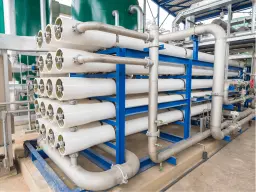
Reverse Osmosis
Semi‑permeable polyamide membranes operating at pressures of 15–30 bar reject up to 99 % of dissolved salts, organics and colloids, yielding permeate with conductivity as low as 10 µS/cm. Reverse osmosis units are often installed downstream of ion exchange or electrodialysis to polish the water before final rinsing.
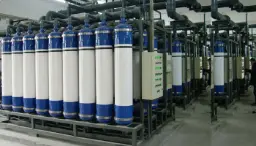
Ultrafiltration
Membranes with pores of 10–100 nm separate colloidal particles, fine suspended solids and emulsified oils from rinse water. Ultrafiltration protects downstream ion exchange or RO membranes from fouling and recovers concentrated drag‑out that can be returned to the plating bath. Cross‑flow modules run at transmembrane pressures of 1–5 bar.
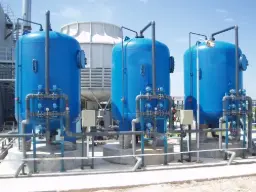
Activated Carbon Filters
Granular activated carbon filters adsorb organic brighteners, surfactants and breakdown products from plating baths. These chemicals can pass through ionic separation systems and cause foam or poor wettability if not removed. Carbon beds typically operate at contact times of 10–20 minutes and require regular thermal reactivation.
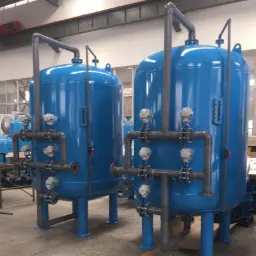
Deionization
Strong‑acid cation and strong‑base anion resins are packed in columns to remove copper, nickel, gold and other ions from dilute rinse waters. Operating in columns with superficial velocities of 10–20 m/h, the resins adsorb metal ions, releasing hydrogen or hydroxide ions in exchange, and produce high‑purity effluent suitable for reuse.
A combination of these technologies yields the best performance for complex plating lines. Ultrafiltration removes particulate matter before the water reaches ion exchange beds, preventing resin fouling. Ion exchange captures trace metal ions and reduces conductivity, while electrodialysis concentrates metals for recovery without adding chemicals. Reverse osmosis acts as a final barrier, polishing the water to meet ultra‑pure rinse requirements for semiconductor devices with sub‑10 nm features. Activated carbon and UV/ozone systems mitigate organic contaminants that can cause micro‑defects or interfere with adhesion promoters. Selecting and sequencing these systems requires balancing footprint, energy use and recovery efficiency; however, when integrated correctly they create a closed‑loop that dramatically reduces fresh water consumption and ensures compliance with the most stringent discharge limits.
Key Water‑Quality Parameters Monitored
Maintaining the right water chemistry is vital for plating and patterning success. Operators continuously monitor pH because plating electrolytes can have extreme acidity or alkalinity, and even small shifts in the rinse affect metal speciation and deposition quality. Acidic copper sulfate baths operate near pH 1, so rinse water pH typically ranges from 2 to 4; if it drifts higher, copper hydroxide can precipitate, coating parts and fouling membranes. In contrast, nickel or electroless gold baths are alkaline, and their rinses are maintained between pH 7 and 9 to prevent nickel carbonate formation. The ionic strength of rinse water, often represented by conductivity, reveals how much drag‑out has entered the tank. Typical rinse conductivity ranges from 200 µS/cm for final rinses to 2 mS/cm for first‑stage counter‑flow rinses. When conductivity rises above target, control valves divert part of the flow through ion exchange or electrodialysis to restore setpoints.
Metal concentration is measured via online analyzers or periodic grab samples. Copper levels in conditioned rinse water are usually held below 1 mg/L to minimise metal loss and meet discharge limits. Precious‑metal rinses containing gold or palladium have lower thresholds, often below 0.05 mg/L, due to economic and environmental considerations. Temperature is another critical parameter; plating reactions are temperature‑dependent, and rinses near 25–35 °C help remove drag‑out effectively without accelerating chemical decomposition. Operators monitor dissolved oxygen and oxidation‑reduction potential to evaluate whether oxidative processes are active. High dissolved oxygen may indicate air agitation, which aids rinsing but can also introduce carbon dioxide that changes pH. Turbidity and particulate counts are checked to prevent particles from embedding in plated layers or scratching wafers. Finally, total organic carbon (TOC) analysis detects the presence of brighteners and surfactants; elevated TOC triggers activated carbon or UV/Ozone treatment to maintain bath integrity and ensure that subsequent photolithography steps are free of organic residues.
| Parameter | Typical Range | Control Method |
| pH | Acidic copper rinses: 2.0–4.0; alkaline nickel rinses: 7.0–9.0 | Automated acid/alkali dosing and regular calibration of pH sensors |
| Conductivity | Final rinses: 100–500 µS/cm; first‑stage rinses: 0.5–2 mS/cm | Ion exchange or electrodialysis bypass when conductivity exceeds setpoint |
| Copper Ion Concentration | <1 mg/L in conditioned rinse; plating bath 20–50 g/L | Online ion‑selective sensors and periodic grab samples; regeneration of resin when breakthrough occurs |
| Gold/Palladium Ion Concentration | <0.05 mg/L in rinse water | Closed‑loop electrodialysis with concentrate recycle and periodic precious‑metal recovery |
| Temperature | 20–35 °C for rinses; plating baths often 20–50 °C | Thermostatic heaters/coolers and heat exchangers to maintain target temperature |
| Turbidity/Particles | <1 NTU or <100 particles/mL (depends on product) | Ultrafiltration and cartridge filters to remove suspended solids |
| Total Organic Carbon (TOC) | <1–2 mg/L for high‑purity rinses | Activated carbon, UV/Ozone oxidation, regular cleaning of rinse tanks |
| Oxidation‑Reduction Potential (ORP) | 200–400 mV for oxidative rinses | ORP controllers dosing oxidants or reductants to maintain desired redox state |
Design & Implementation Considerations
When designing a water treatment system for copper and precious‑metal plating lines, engineers must consider process throughput, drag‑out rates, water availability and regulatory requirements. High‑density printed circuit board shops may run dozens of plating cells simultaneously, with rinse flows of several cubic metres per hour. A modular design with parallel ion exchange trains allows one train to be taken offline for regeneration without interrupting production. Operators determine the number of rinse stages based on rinsing efficiency; counter‑current triple rinses can achieve dilutions of 100:1, reducing water consumption dramatically. Planners should allocate sufficient space for tanks, pumps and membranes; electrodialysis stacks, for example, require clear access for maintenance and typically produce concentrate streams with 10–20 % of the total flow. Understanding drag‑out chemistry informs whether cation‑only or mixed‑bed resins are appropriate. Acid copper baths produce sulfate and chloride ions, while gold baths may contain cyanide complexes or sulfite; resin selection must match the ionic species to prevent resin degradation.
Compliance with industrial standards and regulations influences equipment choice and monitoring protocols. The first mention of ISO 14001, which governs environmental management systems, reminds designers to integrate waste minimisation and resource efficiency into facility planning. Cleanroom production lines adhering to ISO 14644 cleanliness classes also specify maximum particle counts in rinse water, necessitating ultrafiltration and particle counters. Local discharge permits may impose copper limits of 0.1 mg/L and cyanide limits of 0.01 mg/L; to meet these, treatment systems should have redundancy and online monitoring. Instrumentation selection is critical: robust conductivity and pH probes with automatic temperature compensation improve control accuracy, and dual‑channel controllers can actuate valves based on multiple inputs. Data from sensors should feed into supervisory control systems for trending and predictive maintenance. Implementation also requires considering chemical compatibility; stainless steel piping is adequate for low‑chloride rinses, whereas gold plating solutions containing sulfite require higher‑grade alloys or engineered plastics. Finally, electrical design must account for the high currents used in plating and electrodialysis, ensuring adequate grounding and protection against stray currents that can corrode equipment or introduce noise into control signals.
Operation & Maintenance
Effective operation of plating rinse water treatment relies on disciplined routines and skilled technicians. Daily tasks include inspecting rinse tanks for foam or discoloration, checking sensor outputs for drift and calibrating pH and conductivity probes. Operators measure copper concentration at least weekly using titration or ion‑selective electrodes to verify that ion exchange beds are not exhausted. Resin regeneration is scheduled based on breakthrough curves; cation resins are regenerated with 4–10 % sulfuric acid, while anion resins require 4–6 % caustic; regeneration cycles typically occur every 8 hours in high‑load applications. Electrodialysis systems need periodic polarity reversal and cleaning in place with dilute acid to remove scale; membranes are inspected monthly for physical damage or fouling. Reverse osmosis units undergo backwashing and chemical cleaning when transmembrane pressure increases by 20 % from baseline. Charts of conductivity before and after each unit help operators decide when to perform maintenance.
Asset longevity depends on proper housekeeping and record keeping. Pumps and valves should be lubricated according to manufacturer recommendations, often every six months. Cartridge and bag filters upstream of membranes require replacement when differential pressure exceeds 0.3–0.5 bar. UV/Ozone chambers must have quartz sleeves cleaned and UV lamps replaced annually to maintain radical generation efficiency. Operators routinely monitor heat exchangers to ensure rinse water temperature stays within setpoints; scaling on heat transfer surfaces reduces efficiency and is controlled by periodic acid washing. Training is critical: maintenance personnel must understand hazard communication for handling regenerants and safe practices for acid handling. Documentation of each maintenance action, sensor calibration and component replacement feeds into quality audits. Should a failure occur, such records facilitate root cause analysis and continuous improvement. By adhering to schedules and monitoring setpoints, plants maintain stable plating quality, avoid contamination events and minimise unplanned downtime.
Challenges & Solutions
The interface between plating chemistry and water treatment presents unique operational challenges. Problem: scaling and fouling of membranes or electrodes reduce system efficiency and increase energy consumption; sulfate and carbonate precipitates from plating baths can deposit on electrodialysis stacks, while organic brighteners coat RO membranes. Solution: implementing robust pretreatment, such as ultrafiltration and activated carbon, reduces foulant loading, and anti‑scalant dosing at controlled concentrations of 5 mg/L prevents mineral deposition; routine cleaning with acidic or alkaline solutions restores performance. Problem: fluctuations in drag‑out volume and composition cause conductivity spikes and pH swings that can upset downstream units. Solution: installing equalisation tanks with agitation homogenises the feed and using advanced control algorithms with proportional‑integral (PI) control smooths valve actions, maintaining conductivity within target bands of 200–1000 µS/cm. Another challenge involves managing the regenerant streams; ion exchange produces spent acid and caustic solutions containing copper or gold.
Problem: disposing of these regenerants without metal recovery can be costly and environmentally damaging; the presence of precious metals demands recovery. Solution: integrating electro‑winning cells to recover metals from regenerants reduces waste and produces saleable metal cake; the remaining neutralised solutions can be treated in conventional wastewater systems. Problem: microbial growth in warm rinse tanks and carbon beds leads to biofilm formation that interferes with flow and contaminates baths. Solution: maintaining temperature below 30 °C, adding periodic biocide shocks and ensuring that carbon beds are isolated during biocide dosing prevents biological fouling. Problem: the capital and operational cost of advanced water treatment can deter some facilities. Solution: performing a life‑cycle cost analysis shows that chemical savings and reduced discharge fees often provide payback within three to five years; modular equipment design allows gradual expansion as production grows. Together, these problem–solution pairs illustrate that anticipating issues and applying targeted remedies keeps electroplating and patterning lines running smoothly while protecting both product quality and the environment.
Advantages & Disadvantages
Recovering and reusing rinse water in electroplating offers significant benefits. Closed‑loop systems drastically reduce the volume of water consumed, aligning with sustainability goals and mitigating risk in regions with water scarcity. Metal recovery units return valuable copper, gold and palladium to the plating baths, cutting raw material purchases. Consistent water quality stabilises plating thickness and microstructure, which is critical for sub‑micron interconnects and high‑frequency electronics. Implementing water treatment also enhances compliance with environmental permits and reduces the risk of regulatory fines. On the operational side, automated water recycling can simplify logistics by minimising the need for tank dumps and chemical deliveries, freeing personnel to focus on process optimisation. The integration of online monitoring and control supports predictive maintenance and continuous improvement. There is also a reputational benefit: electronics manufacturers can market their products as being produced with reduced environmental impact.
However, water recycling introduces complexity and costs that must be managed. Capital expenses for electrodialysis stacks, ion exchange columns and RO membranes can be substantial, particularly for small or legacy facilities. Skilled operators and comprehensive training are necessary to maintain equipment and interpret sensor data; untrained personnel may mismanage regenerations or fail to detect subtle contamination. Energy consumption increases slightly due to pumps and electrical separation processes, although this is offset by reduced chemical usage. Membrane and resin life is finite; consumables require replacement, and disposal must be planned. There is also a risk of cross‑contamination if systems are not adequately segregated for different plating chemistries; for example, cyanide‑bearing gold baths must never mix with acidic copper streams. Finally, closed‑loop systems may concentrate trace impurities that are not targeted by the chosen treatment process, requiring periodic blowdown or additional polishing to prevent accumulation.
| Pros | Cons |
| Reduces freshwater consumption by up to 80 % through counter‑flow and closed‑loop systems | High capital cost for electrodialysis stacks, ion exchange resin beds and RO units |
| Recovers valuable metals, lowering raw material costs and generating saleable by‑products | Requires skilled operators and regular maintenance to avoid fouling and breakthrough |
| Stabilises plating bath composition and improves product quality | Energy consumption for pumps and electrical separation increases operating costs |
| Meets stringent discharge limits and supports environmental certifications | Consumables such as membranes, resins and UV lamps need periodic replacement |
| Decreases waste treatment sludge volume and simplifies regulatory compliance | Potential cross‑contamination if different plating chemistries share treatment trains |
To illustrate the impact of metal recovery, consider a mass balance on copper recovery from a rinse tank. Using the mass recovery equation (mass = concentration × volume × recovery efficiency), a rinse tank containing 500 L of water at a copper concentration of 20 mg/L and a recovery efficiency of 95 % would yield a recovered copper mass of 9.5 g. This simple calculation shows how even dilute rinses can return significant metal value when processed through modern recovery systems.
Frequently Asked Questions
Question: Why is it necessary to treat rinse water in copper and precious‑metal plating?
Answer: Rinse water becomes loaded with dissolved metal ions and organic additives through drag‑out. If discharged untreated, it violates environmental regulations and wastes valuable metals. Treatment systems recover metals, stabilise rinse chemistry and reduce chemical and water consumption. Maintaining low conductivity and controlled pH also protects subsequent process steps from contamination.
Question: How often should conductivity and pH be checked in plating rinse tanks?
Answer: Conductivity and pH should be monitored continuously with inline sensors connected to control systems. Operators typically verify sensor calibration daily and perform manual spot checks several times per shift. When conductivity exceeds the setpoint, a portion of the rinse flow is diverted through ion exchange or electrodialysis. Regular monitoring ensures timely intervention before bath contamination occurs.
Question: What is the difference between ion exchange and electrodialysis in this context?
Answer: Ion exchange uses resin beads to adsorb ions and release counter‑ions, producing very low‑conductivity effluent but generating regenerant waste. Electrodialysis uses membranes and an electric field to move ions into a concentrate stream, which can often be returned to the plating bath. Electrodialysis typically has lower chemical consumption and is effective for continuous operation, whereas ion exchange provides deeper polishing but requires periodic regeneration.
Question: How are precious metals like gold recovered from rinse water?
Answer: Precious metals are often present at very low concentrations in rinse water. Closed‑loop systems concentrate them using ion exchange or electrodialysis until the solution reaches an economically viable grade. The concentrate is then treated in an electrowinning cell or sent to a refiner, where metals are plated onto cathodes for recovery. Careful segregation of gold‑bearing streams and avoidance of contamination with other chemistries enhance recovery efficiency.
Question: Can a facility retrofit existing plating lines with water recycling equipment without major downtime?
Answer: Yes, modular systems are designed for integration into existing lines. Skid‑mounted ion exchange and electrodialysis units can be installed in parallel with existing rinse tanks, and flow can be gradually diverted during commissioning. Planning and piloting help determine appropriate scaling and ensure that final product quality is not compromised. Many facilities implement recycling in stages to spread capital expenditures over multiple fiscal years.
Question: What happens to the waste streams generated by regeneration and membrane cleaning?
Answer: Regeneration produces acid and caustic solutions containing dissolved metals and salts. These streams are neutralised and treated in conventional wastewater systems or processed through electrowinning to recover metals. Membrane cleaning solutions are managed similarly. Proper segregation and treatment prevent environmental harm and maximise recovery of valuable metals.
Question: How does temperature affect the performance of rinse water treatment systems?
Answer: Temperature influences both plating and separation processes. Warm rinse water improves drag‑out removal and reduces viscosity, but high temperatures accelerate chemical degradation and membrane fouling. Maintaining rinse water between 20 °C and 35 °C keeps membranes within their operational limits and preserves the stability of resin functional groups. Monitoring and controlling temperature ensures consistent treatment efficiency and prolongs equipment life.