High-Purity Water Systems for Endoscope Reprocessing in the Medical Industry
Modern endoscopy has become essential for diagnosis and minimally invasive therapy, and each reusable scope must be thoroughly cleaned and disinfected between procedures. Instrument channels, valves and distal tips are intricate and prone to accumulating protein soils, blood and microbial residues. After manual cleaning and disinfection cycles, staff must rinse the devices with water that will not introduce minerals or organisms back onto the surfaces. Endoscope reprocessing water systems are specialized purification technologies that transform raw municipal feed into water of a quality suitable for cleaning, rinsing and final disinfection. The systems combine softening, demineralization, filtration and microbial control to deliver water with low conductivity, near-neutral pH and minimal bacterial counts. The process ensures that chemical detergents are effectively removed, the endoscopes are not corroded by high mineral content, and cross-contamination is prevented. Only by supplying consistent high-purity water can healthcare facilities comply with stringent hygiene standards and protect patients from waterborne pathogens.
This practice provides substantial business value for hospitals and clinics. Endoscopes represent expensive capital assets, and failure to control biofilm or mineral deposits inside their lumens leads to costly repairs or replacement. High‑purity water minimizes scaling on washer–disinfector chambers and prolongs the life of ultrasonic cleaning tanks, detergent dosing pumps and spray arms. The risk of patient infections linked to contaminated scopes also poses liability and reputational damage. When the final rinse water meets accepted standards for microbiological and chemical purity, the reprocessing cycle is validated, and the instruments can be released for patient use with confidence. For quality managers, water systems enable routine monitoring of parameters such as conductivity, hardness and total viable count. The ability to dial in target values and automate corrective actions reduces manual workload and ensures that quality risks are addressed quickly. Facilities that invest in proper water treatment gain operational efficiency, regulatory compliance and peace of mind for both staff and patients.
Water Treatment Systems Used
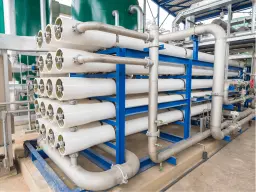
Reverse Osmosis
Semi‑permeable polyamide membranes operating at pressures around 1.5–2.5 MPa reject over 99 % of dissolved salts, silica and organic molecules, delivering low‑conductivity permeate suitable for endoscope rinsing. The concentrate stream carries away hardness ions and trace metals to drain. Typical recoveries of 70–80 % are achieved in a medical reprocessing context, balancing water conservation with membrane longevity.
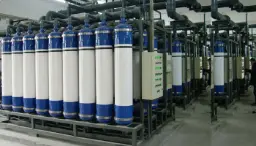
Ultrafiltration
Polymeric hollow‑fiber modules with pore sizes of 0.02–0.1 µm physically remove bacteria, endotoxins and fine colloids from softened or demineralized water. Operating pressures are modest, often below 0.5 MPa, making these units energy efficient. Ultrafiltration is commonly installed downstream of ion exchange or RO to provide an additional microbiological barrier before the final rinse.
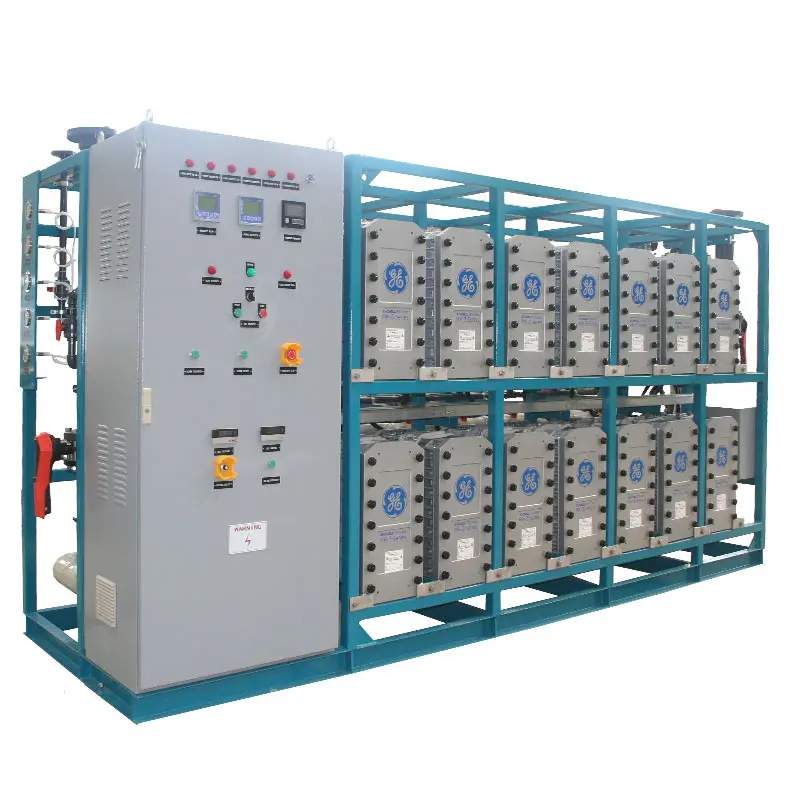
Electrodeiyonization (EDI)
EDI combines ion exchange resins with electrical potential across semi‑permeable membranes to continuously remove ions without chemical regeneration. Diluate streams attain conductivities below 1 µS/cm, while concentrate streams carry captured ions away. The technology is valuable in endoscope reprocessing facilities with high throughput because it provides consistent high‑purity water and reduces reliance on regeneration chemicals.
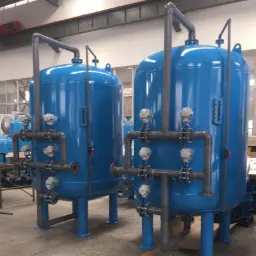
Mixed Bed Ion Exchange
Cation and anion exchange resins operating in a single vessel simultaneously remove calcium, magnesium, bicarbonate and chloride ions. Exchange reactions replace multivalent ions with hydrogen and hydroxide, producing demineralized water with conductivities typically below 15 µS/cm. Mixed bed polishers often follow RO to reduce residual ions and to ensure that rinse water dries without leaving spots on endoscope surfaces.
Endoscope reprocessing requires a combination of these systems rather than a single device. Raw municipal water is first softened to protect downstream equipment, then reverse osmosis reduces the dissolved solids load dramatically. Mixed bed ion exchange or EDI polishes the permeate to achieve ultra‑low conductivities required for spot‑free drying, while ultrafiltration and UV address microbiological risk. Sterile filters at the point of use ensure that no organisms enter the endoscope lumens. Thermal sanitation or periodic chemical cleaning of the loop controls biofilm formation. Each stage contributes a specific barrier, and together they enable continuous delivery of water that meets stringent requirements for conductivity, pH and microbial counts in busy endoscopy units.
Key Water‑Quality Parameters Monitored
Continuous monitoring is essential to ensure that the water feeding endoscope washers meets defined criteria. Conductivity is a surrogate for total dissolved solids and provides rapid feedback on ion removal efficiency; typical limits for final rinse water are less than 30 µS/cm at 25 °C based on standards cited by Australian and European guidelines. If conductivity rises above this value, mineral deposits may form on metal surfaces, and ion exchange or membrane systems must be regenerated or replaced. pH affects both the effectiveness of disinfectants and the potential for corrosion. Neutral to slightly acidic water (5.5–8.0) is generally accepted for final rinses, ensuring compatibility with flexible scopes and minimizing the risk of alkaline residues that could damage adhesives. Hardness, expressed as calcium carbonate, is monitored to prevent scale formation in heaters and spray arms; final rinse water should be below roughly 10 mg/L CaCO₃. Low chloride concentrations, often below 10 mg/L, are important to prevent pitting of stainless steel. Iron, phosphate and silicate are measured at low parts‑per‑million levels because these species can promote staining or interfere with disinfectant efficacy.
Microbiological parameters receive equal attention. Total viable count (TVC) provides a measure of heterotrophic bacteria in the water; a typical target is ≤10 colony‑forming units per 100 mL for thermolabile endoscope washers and ≤100 CFU/100 mL for other reprocessing equipment. Pseudomonas aeruginosa and atypical Mycobacterium species must not be detected in any 100 mL sample. Endotoxins, which are lipopolysaccharide fragments from Gram‑negative bacteria, pose a pyrogenic risk; limits are commonly set at 0.25 EU/mL for washer–disinfectors and up to 30 EU/mL for thermolabile endoscope reprocessors. Temperature is monitored because warm water (typically 45–55 °C) improves detergent action and rinse efficiency while excessive heat may damage sensitive scopes. Dissolved oxygen and oxidation–reduction potential can also be tracked to verify that residual disinfectants like free chlorine or ozone are absent before the final rinse. By following a multi‑parameter approach, technicians can swiftly identify deviations and implement corrective measures, ensuring that water quality remains within safe boundaries.
Parameter | Typical Range | Control Method |
Conductivity | ≤30 µS/cm at 25 °C | Reverse osmosis, mixed bed ion exchange or EDI to remove dissolved ions |
pH | 5.5–8.0 | Acid/alkali dosing, degassing and resin selection to stabilize pH |
Total hardness | ≤10 mg/L CaCO₃ | Softening and RO to remove calcium and magnesium |
Chloride | ≤10 mg/L | RO membranes and anion exchange resins; periodic flushing |
Iron | ≤0.2 mg/L | Pre‑filtration, activated carbon and careful pipe material selection |
Silicate | ≤1 mg/L | RO and mixed bed polishing; monitor membrane integrity |
TVC | ≤10–100 CFU/100 mL | Ultrafiltration, UV disinfection and sterile point‑of‑use filters |
Endotoxins | ≤0.25 EU/mL for washer–disinfectors | Ultrafiltration and thermal or chemical loop sanitation |
Pseudomonas/Mycobacteria | Not detected in 100 mL | Terminal 0.2 µm filters, rigorous sampling and regular filter replacement |
The graph placeholder illustrates how conductivity and total viable counts might vary in an endoscope reprocessing facility across weeks, highlighting correlations when filtration systems approach exhaustion. By plotting two curves—one showing conductivity trending upward as resin capacity depletes and another showing microbial counts spiking when filters are compromised—operators can visually identify when maintenance actions must be taken. Such trends reinforce the value of continuous monitoring and pre‑emptive intervention.
Design & Implementation Considerations
Designing a water treatment system for endoscope reprocessing begins with understanding the feed water characteristics and the throughput requirements of the endoscopy unit. Raw water quality can vary widely by region, affecting the sizing of softeners and membrane arrays. When specifying equipment, engineers should consult ISO 15883 series standards, which outline requirements for washer–disinfectors and thermolabile endoscope reprocessors. These standards encourage the use of high‑efficiency pre‑filters, stainless steel distribution loops and sanitary fittings. Pre‑filtration typically includes sediment cartridges to remove sand, rust and suspended solids that would foul downstream membranes. Activated carbon filters can remove chlorine and organic compounds that cause membrane oxidation. Pressure pumps and storage tanks must be sized to accommodate peak demand without subjecting membranes to extreme flux variations. Designers also consider redundancy; dual‑train reverse osmosis skids or parallel ion exchange columns allow one unit to be taken offline for regeneration while the other continues to supply purified water.
Another aspect of implementation is the distribution network. Dead legs in piping provide locations where stagnant water can harbor biofilm, so loops are designed with continuous circulation and minimal branch lengths. Materials must resist corrosion; AISI 316L stainless steel or high‑purity plastics are preferred over galvanized steel, which can release iron. Flow meters and pressure gauges are installed to monitor performance, and sampling points are strategically located before and after critical components. Control systems integrate conductivity, temperature and flow sensors with alarms to alert operators when setpoints are exceeded. HTM 01‑06, the U.K. health technical memorandum on decontamination of flexible endoscopes, suggests regular validation of water treatment systems, including challenge tests using known microbial loads. Facilities should also reference ISO 13485 for medical device quality management and FDA 21 CFR parts relating to sterilization to ensure documentation and traceability of water quality data. The integration of such standards into the design ensures that the facility meets regulatory expectations and facilitates accreditation by health authorities.
Operation & Maintenance
Day‑to‑day operation of endoscope reprocessing water systems requires vigilant monitoring, timely maintenance and skilled personnel. Operators routinely check conductivity and pH readings displayed on control panels, watching for upward trends that indicate resin exhaustion or membrane fouling. When softener brine tanks near depletion, weekly regeneration schedules help maintain hardness control without disrupting supply. Ultraviolet lamps must be cleaned and replaced according to manufacturer recommendations, often every 8 000 hours of operation, to maintain germicidal output. Terminal 0.2 µm filters fitted at washer inlets are changed monthly to avoid biofilm buildup and pressure drop. Hot water sanitization of distribution loops is usually carried out at 80 °C for at least 30 minutes; this thermal flush destroys biofilm and removes nutrients. If chemical sanitization is used, oxidizing agents such as peracetic acid or chlorine dioxide are dosed to achieve 0.5 mg/L residual at point of use for a controlled contact time, then flushed until residues are undetectable.
Preventive maintenance extends beyond routine tasks. Reverse osmosis membranes require periodic chemical cleaning to remove scale, biofouling and organic matter; cleaning intervals depend on feed water quality but are typically performed every three to six months. Ion exchange resins are inspected for channeling and attrition and replaced when capacity drops significantly. Instrument technicians calibrate sensors—conductivity, pH, flow and temperature—according to quarterly schedules to ensure data accuracy. Documentation is critical: maintenance logs record each regeneration, cleaning and sanitization event, and deviations trigger corrective actions. Staff training ensures that everyone understands sampling procedures, sterile technique and hygiene practices when handling filter housings or taking water samples. By adhering to defined setpoints and intervals, operations teams can guarantee that the system continues to produce water that meets quality specifications, thereby supporting reliable reprocessing workflows.
Challenges & Solutions
Water treatment in endoscope reprocessing facilities is not without obstacles. Problem: microbial contamination can occur when distribution loops harbor biofilm, leading to elevated total viable counts. Solution: implementing continuous recirculation, installing 0.2 µm sterile filters at the point of use and scheduling thermal or chemical sanitization reduces biofilm growth and maintains microbiological quality. Elevated conductivity may result from resin exhaustion or membrane fouling. In such cases, operators can perform conductivity trending analyses to anticipate exhaustion, regenerate or replace media and clean membranes before the final rinse water falls out of specification. Scaling and corrosion can damage washers and instruments, particularly when water is rich in hardness ions or chloride. Softening systems and chloride monitoring help prevent these issues, while selecting corrosion‑resistant materials for piping and valves adds resilience.
Operational disruptions pose another challenge. Problem: unplanned downtime due to equipment failure or delayed regeneration can halt endoscope processing and delay patient procedures. Solution: designing redundancy into the system, such as duplex RO trains and parallel ion exchange beds, allows maintenance without interrupting supply. Another difficulty involves balancing energy and chemical consumption with sustainability goals. Systems that rely on thermal sanitation consume significant energy, while chemical disinfection generates hazardous waste. Facilities can evaluate advanced technologies like electrodeionization, which reduce chemical usage, and optimize thermal sanitization schedules to coincide with off‑peak hours. Staff compliance and training also influence outcomes; misunderstandings about sample collection or filter replacement can compromise water quality. Ongoing education and the use of clear standard operating procedures help mitigate human error. By anticipating these challenges and implementing targeted solutions, healthcare facilities safeguard both patient safety and operational efficiency.
Advantages & Disadvantages
Investing in dedicated water treatment for endoscope reprocessing yields clear benefits. High‑purity water eliminates residual detergents and disinfectants, protecting sensitive scopes from chemical attack. Low conductivity and hardness prevent mineral spots and scale, preserving the appearance and function of endoscope lenses and channels. Effective microbial control reduces the risk of patient infections and supports compliance with accreditation bodies. Automated systems with integrated monitoring and alarms streamline quality management, freeing personnel to focus on other tasks. Scalability allows systems to expand with growing procedure volumes, and modular designs accommodate upgrades without full replacement. Comprehensive treatment also prolongs the life of washer–disinfectors by preventing corrosion and clogging. These advantages translate into lower maintenance costs, improved patient outcomes and strengthened regulatory standing.
Nevertheless, there are trade‑offs. Water treatment equipment requires capital investment and floor space, which can challenge smaller clinics. Ongoing costs include energy for pumps and heaters, chemicals for regeneration and sanitization, and periodic replacement of membranes and resins. Complex systems demand skilled technicians for operation and troubleshooting; improper maintenance can lead to contamination or equipment damage. Waste streams from regeneration and concentrate disposal must be managed responsibly. Thermal sanitization contributes to greenhouse gas emissions and may not align with sustainability objectives. Finally, strict monitoring and documentation add administrative overhead. Facilities weighing these factors must balance patient safety and instrument protection against operational costs and resource consumption.
| Pros | Cons |
| Enhances patient safety by preventing microbial contamination | Requires significant capital and operational expenditure |
| Protects endoscopes and washers from scaling and corrosion | Needs skilled staff for operation and maintenance |
| Ensures compliance with ISO and health department standards | Generates waste streams from regeneration and flushing |
| Automates monitoring and alarms, reducing human error | Occupies valuable space in sterile service departments |
| Extends equipment life and lowers downtime | Energy and chemical use may conflict with sustainability goals |
Frequently Asked Questions
Question: Why is purified water required for rinsing endoscopes rather than tap water?
Answer: Municipal tap water may contain hardness ions, chlorine, bacteria and endotoxins that can redeposit on cleaned instruments or support biofilm formation. Purified water produced by softening, reverse osmosis and ultrafiltration removes these contaminants, providing a final rinse that does not compromise disinfection. Using treated water also prevents mineral staining and corrosion of delicate endoscope components.
Question: How often should the endoscope reprocessing water system be sanitized?
Answer: Most facilities perform thermal or chemical sanitization of distribution loops on a weekly or monthly basis depending on usage and microbial monitoring results. Thermal sanitation involves circulating water at about 80 °C for a set duration, while chemical methods use oxidizing agents like peracetic acid at specified residual concentrations. Regular sanitization prevents biofilm buildup and maintains microbiological quality.
Question: What standards govern water quality for endoscope reprocessing?
Answer: International standards such as ISO 15883 parts 1 and 4 specify performance and validation criteria for washer–disinfectors and endoscope reprocessors. National guidance documents like HTM 01‑06 in the U.K. and AS/NZS 4187 in Australia provide specific parameter limits for conductivity, pH, hardness and microbial counts. Facilities often consult manufacturer recommendations and local regulations to ensure compliance.
Question: Can reverse osmosis alone provide sufficiently pure water for the final rinse?
Answer: While reverse osmosis removes the majority of dissolved ions and bacteria, trace minerals and endotoxins may still be present in the permeate. Medical guidelines often recommend pairing RO with mixed bed ion exchange or electrodeionization to achieve ultra‑low conductivities and adding ultrafiltration and UV disinfection to address endotoxins and microbes. Terminal sterile filters at the point of use offer an additional barrier, ensuring that the final rinse water meets stringent specifications.
Question: How is the performance of a water treatment system verified over time?
Answer: Performance verification involves routine monitoring of key parameters, periodic microbiological sampling and scheduled validation tests. Sensors continuously measure conductivity, temperature and flow, while laboratory analysis confirms pH, hardness and total viable counts. Documentation of trends allows operators to predict when resin beds will exhaust or membranes will foul. Formal validation under simulated worst‑case conditions, as recommended by standards, ensures that the system consistently delivers the required water quality.
Question: What happens if endotoxin levels are found to exceed limits?
Answer: Elevated endotoxin levels suggest bacterial colonization or membrane breach. Operators should immediately investigate potential sources, such as compromised ultrafiltration modules or contaminated sample collection techniques. Remedial actions include sanitizing the distribution loop, replacing filters and membranes, and verifying sampling protocols. Only after test results confirm that endotoxin counts have returned to acceptable levels should reprocessing resume.
Question: Are there sustainable alternatives to thermal sanitization?
Answer: Facilities seeking to reduce energy consumption can explore chemical disinfection using oxidizing agents at controlled concentrations or continuous UV treatment combined with proper loop design. Electrodeionization reduces chemical usage for ion removal, and heat recovery systems on RO concentrate streams can lower overall energy demand. Adopting these alternatives requires careful evaluation of costs, effectiveness and regulatory acceptance.