Fertigation Water Purification
Fertigation blends fertilisers into irrigation water so that nutrients and water are delivered together through drip emitters or sprayers. Fertigation water purification is the treatment and conditioning of this mixed nutrient solution to remove particulates, scale‑forming minerals and pathogens before it enters the distribution network. In the agricultural industry this conditioning starts at the source, where raw groundwater, surface water or recycled effluent is assessed for pH, salinity, hardness and microbial load. In many cases the water is turbid or carries fine clay particles, organic debris or algae that can settle inside emitters and clog them. Dissolved minerals such as calcium carbonate, iron and manganese can precipitate when fertilisers or acids are added; this precipitation reduces flow uniformity and makes nutrient dosing unpredictable. Pathogenic organisms such as bacteria, fungi or nematodes can be spread from plant to plant in closed loops, causing disease outbreaks that devastate greenhouses or field crops. Purification therefore targets both the physical and biological quality of feed water. It uses filters, separators, softening systems and disinfectants to ensure that the nutrient solution delivered to plants has a consistent composition and is free from clogging agents. Reliable treatment also protects expensive pumps, injectors and pipelines from abrasion and corrosion, prolonging their service life.
A well‑controlled fertigation system allows growers to tailor nutrient concentrations precisely to a crop’s growth stage while conserving water. Clean water ensures that fertiliser injection units operate reliably at the correct injection ratio and that measuring instruments for electrical conductivity and pH respond accurately. Without water treatment, high concentrations of suspended solids raise the risk of emitter blockage, leading to uneven wetting patterns, nutrient hotspots and yield losses. Scaling of lines and drippers increases energy consumption because pumps must overcome higher friction losses. Untreated water also harbours biofilms that accumulate inside pipes; these films shield bacteria from disinfectants and release sloughing material that clogs emitters later. By investing in appropriate filtration and conditioning, farmers reduce maintenance frequency, save labour and ensure stable nutrient delivery throughout the season. Purified fertigation water also reduces the risk of contaminating soil and groundwater with excess salts because growers can operate at lower leaching fractions. In an era of scarce resources and stringent sustainability standards, water treatment in fertigation offers a route to higher resource efficiency and better environmental stewardship in agriculture.
Water Treatment Systems Used
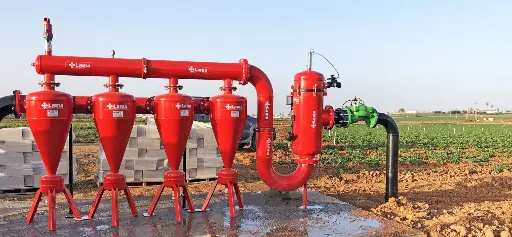
Hydrocyclone Sand Separators
Hydrocyclones use centrifugal force to separate heavy sand and grit from irrigation water. At typical operating pressures of 2–5 bar, these separators spin the water in a conical chamber, allowing dense particles to fall into a collection chamber while clear water exits at the top. They protect downstream filters and emitters from abrasive wear when groundwater or canal water carries significant mineral particles.
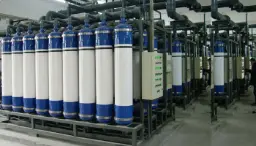
Ultrafiltration
Polymeric hollow‑fibre membranes with pore sizes of 0.01–0.1 µm remove colloidal particles, bacteria and protozoa from feed water. Operating at 1–3 bar trans‑membrane pressure, these modules produce clarified water suitable for mixing with concentrated fertiliser solutions and reduce biological fouling downstream.
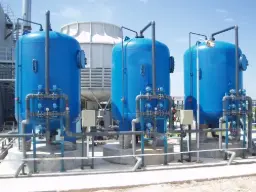
Media Filtration
Granular media filters, often filled with quartz sand or crushed anthracite, trap suspended solids down to 80–100 µm as water flows downward through the bed. These filters operate at 50–80 m³/h per m² of surface area and are ideal for removing algae, silt and organic debris from surface water before fertilisers are injected.
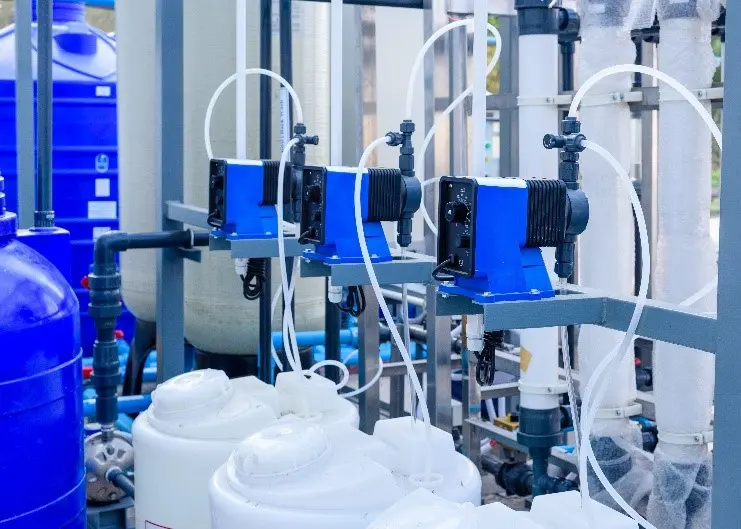
Chlorination and Acid Injection
Inline dosing pumps introduce sodium hypochlorite, calcium hypochlorite or peracetic acid into the fertigation stream at concentrations around 1–2 mg/L free chlorine to control biofilm formation. Acid injection (e.g., phosphoric or sulfuric acid) is used to lower the pH and to prevent precipitation of calcium carbonate when the alkalinity of the source water is high.
These water treatment systems function together to ensure that the nutrient solution remains uniform from the tank to each emitter. Filtration units remove particles that would physically block the narrow passageways of drip emitters or micro‑sprayers and reduce the organic load that feeds biofilm growth. Hydrocyclones and media filters offer bulk separation for heavier sediments, while disc and screen filters provide finer polishing. Ultrafiltration adds a barrier against microorganisms, protecting crops grown in closed‑loop or greenhouse systems where disease spread is a major concern. Dosing with oxidising agents and acids further mitigates biological growth and scaling within the distribution network and helps maintain target pH and conductivity. By combining these technologies, agricultural operators can adapt to varying source water qualities and meet crop‑specific nutrient delivery requirements, ensuring efficient fertigation even with challenging water sources.
Key Water‑Quality Parameters Monitored
Monitoring water quality is essential for effective fertigation. The nutrient solution’s pH influences nutrient availability; most vegetable crops prefer slightly acidic conditions in the root zone, typically between 5.5 and 6.5. If the pH drifts above 7.0, iron, manganese and phosphorus become less soluble and precipitate, causing emitter clogging and nutrient deficiencies. When pH drops below 5.0, ammonia toxicity may occur and corrosion of pipelines accelerates. Farmers adjust pH by injecting acids or alkaline substances depending on the carbonate content of the feed water. Electrical conductivity (EC) reflects the total dissolved salts; target nutrient solution EC values usually range from 1.5–2.5 dS/m for hydroponic tomatoes or cucumbers. Feed water with high salinity reduces the room available for fertiliser salts, so blending or desalination may be necessary. Turbidity and total suspended solids (TSS) indicate the amount of particulate matter; high values require more robust filtration to avoid clogging. Hardness expressed as calcium carbonate equivalents affects scaling potential; waters above 100 mg/L CaCO₃ often require softening or acid injection. Bicarbonate alkalinity influences the buffering capacity and determines how much acid is needed to reach the desired pH. Sodium adsorption ratio (SAR) and chloride concentration are monitored because high sodium or chloride levels can harm sensitive crops and cause emitter corrosion. Dissolved oxygen levels are checked, especially in recirculating systems, to prevent anaerobic conditions that encourage bacterial slime formation. Finally, microbiological counts of coliforms and fungi highlight when disinfection or membrane processes are required.
Automated sensors integrated into the fertigation system continuously measure key parameters and send data to the control unit. Inline pH and EC probes provide real‑time feedback, allowing fertiliser pumps to adjust injection rates to maintain setpoints. Turbidity meters and particle counters detect changes in water clarity; if turbidity rises above 5 NTU, the system can initiate a backwash or flush sequence. Pressure differential switches across filters alert operators to fouling; a rise of more than 0.8 bar signals that cleaning is necessary. Flow meters validate that the intended water volumes reach each sector of the field; deviations may indicate partial blockage. Regular laboratory testing complements online monitoring, verifying parameters such as hardness, alkalinity and microbial content that are not continuously measured. Data from these monitoring tools inform proactive maintenance, chemical dosing and blending decisions. Consistent observation of quality parameters helps maintain homogeneous nutrient delivery, protects equipment and ensures that the fertigation system meets regulatory requirements for safe agricultural water use.
| Parameter | Typical Range | Control Method |
| pH | 5.5–6.5 | Acid or alkali injection, buffering agents |
| Electrical Conductivity (EC) | 1.5–2.5 dS/m | Adjust fertiliser concentration, dilute with low‑salinity water |
| Turbidity | 0–5 NTU | Media or disc filtration, backwashing |
| Total Suspended Solids | 0–50 mg/L | Hydrocyclone separators, screen filters |
| Hardness (as CaCO₃) | 20–100 mg/L | Acid injection, partial softening |
| Alkalinity (HCO₃⁻) | 40–120 mg/L | Acid dosing to neutralise bicarbonates |
| Sodium Adsorption Ratio (SAR) | 0–10 | Blending or desalination, gypsum addition |
| Chloride | 0–70 mg/L | Source selection, blending, membrane processes |
| Microbial Count | <100 CFU/mL | Chlorination, UV or ultrafiltration |
Design & Implementation Considerations
Designing a fertigation water purification system begins with characterising the source water, fertiliser requirements and crop sensitivity. Engineers analyse the raw water for turbidity, dissolved minerals, microbial contamination and seasonal variability. They then select treatment steps to address the most critical contaminants. Source pumps must be sized not only to deliver the peak irrigation demand but also to accommodate the pressure losses across filters and injectors. Flow rates, pump curves and pipeline diameters are calculated to ensure that each emitter receives uniform pressure. The arrangement of filters—hydrocyclone followed by media filters and finer disc filters—is planned so that heavier sediments are removed upstream, minimising the frequency of fine filter backwashing. If the water has high salinity or specific ion toxicity, reverse osmosis or nanofiltration units can be incorporated to reduce sodium and chloride before fertilisation. Chemical dosing systems are specified according to the alkalinity and microbial load; acid tanks and dosing pumps must be sized to deliver precise volumes at the design flow rate. ISO 22000 food safety management systems and Codex Alimentarius guidelines emphasise that water used in agriculture should not introduce contaminants into the food chain, so hygienic design and traceability are paramount.
Instrumentation and automation play a central role in modern fertigation systems. Programmable logic controllers (PLCs) integrate sensor signals for pH, EC, flow and pressure and adjust pump speeds or valve positions to maintain setpoints. Fertiliser injectors, often Venturi devices or positive displacement pumps, are calibrated to achieve accurate nutrient ratios; calibration charts consider temperature and viscosity of concentrated fertiliser solutions. Backwash valves on filters are motorised and controlled by timers or differential pressure sensors. Data logging systems provide records of water quality and operation parameters for auditing and optimisation. Compliance with WHO Guidelines for Drinking Water Quality and FDA 21 CFR irrigation water standards guides the selection of materials; all wetted components should be food‑grade and resistant to corrosion by fertilisers and acids. The layout must allow access for cleaning and maintenance; locating filters near a concrete pad with drainage facilitates backwash disposal. Piping materials such as PVC, polyethylene or stainless steel are chosen based on pressure rating, chemical compatibility and temperature. Electrical systems require proper grounding and surge protection, particularly when pumps or disinfection devices draw high starting currents. In greenhouse installations, water storage tanks are insulated or shaded to minimise temperature fluctuations that affect solubility and microbial growth.
Sustainability is a further design consideration. Closed recirculating systems in high‑tech greenhouses aim to reuse nutrient solution to conserve water and fertiliser. In such systems, return lines from drainage gutters or grow bags feed into a collection tank, where sensors measure EC and pH; the solution is then replenished and sent back to the plants. Proper design must include disinfection steps to prevent disease spread and accumulation of unwanted ions. Rainwater harvesting can supplement groundwater supplies but requires first‑flush diversion and particulate filtration to ensure quality. Solar‑powered pumps and variable frequency drives reduce energy consumption by matching pump output to demand. In open‑field agriculture, fertigation often uses drip tape and sub‑surface drip lines; the design must consider soil type, slope and infiltration rate to avoid ponding or deep percolation. Appropriate emitter spacing and flow rate selection ensure uniform distribution. When multiple fertiliser tanks are used, the system should prevent cross‑contamination by using non‑return valves and separate injection points. Training staff to understand the design intent and operating procedures is integral to successful implementation because even well‑engineered systems fail without proper human oversight.
Calculation Example
To illustrate a typical design calculation, consider determining the chlorine contact time (CT) required for disinfecting incoming water. If a system injects 2 mg/L free chlorine and provides a retention time of 10 minutes in a contact tank, the CT value is calculated using the simple relation CT = C × T. Here C = 2 mg/L and T = 10 min, resulting in a CT of 20 mg·min/L, which is suitable for controlling most bacteria in irrigation water.
Operation & Maintenance
Efficient operation of fertigation water purification relies on routine monitoring and timely preventive measures. Operators begin by checking the raw water source daily for changes in turbidity, odour or colour that might indicate algae blooms or upstream disturbances. Before each irrigation cycle the main filters are inspected; pressure gauges across media and disc filters are read and if the differential exceeds 0.8 bar a backwash is initiated. Automated backwashing sequences are usually scheduled for low‑demand periods to avoid disrupting irrigation, but manual intervention may be necessary after storms. Hydrocyclone collection chambers are emptied at least weekly to prevent accumulated sand from re‑entering the system during flow fluctuations. Acid dosing pumps are calibrated and inspected for leaks; injection points are checked to ensure that mixing occurs downstream of sensitive equipment like ultrasonic flow meters.
Fertiliser injectors require careful attention because their performance depends on clean water. Venturi‑type devices are prone to clogging by particulate matter; operators regularly flush these devices and verify that the suction lines are clear. Positive displacement injectors must be recalibrated when fertiliser concentration changes; volumetric checks using graduated cylinders help confirm dosing accuracy. Inline sensors for pH and EC are cleaned with deionised water and recalibrated with standard buffers and conductivity solutions at monthly intervals. Filters may need more frequent maintenance when the feed water quality is poor. A general rule is to flush drip lines and sub‑mains until water runs clear; this may be weekly for very dirty water, every two weeks for moderately dirty water, and once a month when the source water is clean. Pumps and motors are inspected monthly; bearings are greased, seals checked for leaks and electrical connections tightened.
Maintenance also involves chemical treatment to prevent biological growth and scaling. When biofilm formation is detected, shock chlorination may be applied by raising free chlorine concentration to 5 mg/L for several hours, followed by thorough flushing. Acid flushing is performed to dissolve carbonate deposits; this involves circulating a dilute acid solution (e.g., 0.5 % phosphoric acid) through the system for a set time and then flushing with clean water. Staff must be trained in safe handling of chemicals and equipped with personal protective equipment. Records of chemical use, flow rates, backwash cycles and sensor calibration should be kept for regulatory compliance and to identify trends in system performance. Seasonal maintenance includes inspecting and replacing worn drip tapes or emitters, draining and cleaning storage tanks, and verifying that non‑return valves and air release valves function properly. Effective operation and maintenance reduce downtime, maintain uniform nutrient delivery and prolong the lifespan of the fertigation system.
Challenges & Solutions
Complex fertigation systems face numerous operational challenges that can compromise water quality and crop health. Problem: Suspended solids and organic matter from canals or reservoirs can overwhelm filters, leading to frequent clogging and high labour costs. Solution: Implementing a multi‑stage filtration train that includes hydrocyclones, media filters and disc filters reduces the load on each unit and extends backwash intervals; adding a coagulation step upstream can also improve removal efficiency. Problem: High hardness and bicarbonate levels promote scaling and block emitters, particularly when phosphate or nitrate fertilisers are injected. Solution: Continuous acid injection neutralises bicarbonates and lowers pH to a level where calcium remains dissolved; periodic acid flushing dissolves existing deposits. Problem: Biofilm formation inside pipes and emitters causes gradual clogging and harbours plant pathogens. Solution: Maintaining residual oxidant levels of 1–2 mg/L free chlorine and periodically shocking the system helps control biofilms, while ultrafiltration provides a physical barrier against microbial ingress. Problem: Variability in source water quality due to rainfall events or seasonal changes can upset nutrient balances and salinity. Solution: Blending multiple water sources, installing real‑time sensors and automating fertiliser dosing allow the system to adapt quickly to fluctuations. Problem: Operating costs increase when equipment is oversized or chemical dosing is excessive. Solution: Proper design, regular calibration and optimisation of pump speeds, backwash cycles and chemical dosing schedules conserve energy and reagents without compromising water quality.
Clogging and scaling are not the only difficulties; reliability and human factors play roles as well. Remote farms may lack skilled technicians to maintain sophisticated systems, leading to misoperation or neglect. Training programmes, clear operating procedures and the use of user‑friendly interfaces mitigate these issues. Power supply disruptions can halt pumping and damage electronic controls; installing surge protectors and backup generators ensures continuity. In recirculating greenhouse systems, accumulation of sodium, chloride or heavy metals can occur over time because these ions are not taken up by plants. Periodic dumping of the recirculated solution and replenishment with fresh water, or selective desalination using reverse osmosis, prevents toxic build‑up. Another challenge is the regulatory environment; growers must demonstrate that their irrigation water meets safety standards, but excessive testing can be costly. Adopting a risk‑based monitoring programme that focuses on critical control points balances compliance with practicality. Water scarcity is an overarching challenge; by using purified fertigation water efficiently, growers can produce more with less, but competition for water resources may still limit expansion. Strategies such as rainwater harvesting, treated wastewater reuse and precision irrigation help address this constraint.
Advantages & Disadvantages
A properly implemented fertigation water purification strategy brings numerous benefits to agricultural enterprises. The most prominent advantage is improved crop nutrition: cleaned water allows for accurate fertiliser dosing, ensuring that plants receive the intended ratios of nitrogen, phosphorus, potassium and micronutrients at each growth stage. Uniform nutrient delivery translates into consistent plant growth, higher yields and better product quality. Clean water reduces the incidence of emitter clogging, which in turn minimises labour spent on repairs and flushing. Filtration and disinfection protect pumps, valves and sensors from damage, extending the life of costly equipment. By maintaining a stable EC and pH in the root zone, purified water enhances nutrient uptake efficiency, allowing growers to reduce fertiliser application rates and saving on input costs. Precision fertigation also reduces nutrient leaching into soil and groundwater, aligning with environmental regulations and sustainability goals. Finally, in recirculating systems the ability to treat and reuse water reduces total consumption, which is especially valuable in regions facing water scarcity.
Despite these benefits, there are disadvantages and trade‑offs to consider. Water treatment infrastructure requires capital investment in filters, dosing pumps and control systems. Operational costs include energy for pumping and backwashing, periodic replacement of filter media and membranes, and purchase of chemicals for disinfection and pH adjustment. Skilled personnel are needed to operate and maintain the system, interpret sensor data and adjust chemical dosing; such expertise may be scarce in remote agricultural areas. Incorrect operation of chemical dosing systems can harm crops or equipment; for example, overdosing acid may lower pH too far, causing nutrient imbalances or corrosion. Treatment processes may generate waste streams such as backwash water containing sediments and chemicals, which must be managed responsibly. Moreover, the complexity of combining water treatment with fertiliser injection can deter some growers who prefer simple irrigation systems. Recognising these disadvantages helps farmers make informed decisions and implement the most cost‑effective level of purification for their specific circumstances.
| Advantages | Disadvantages |
| Improved nutrient delivery accuracy | Capital cost of filtration and dosing equipment |
| Reduced emitter clogging and maintenance labour | Ongoing energy and chemical consumption |
| Extended equipment life through corrosion and abrasion control | Requirement for skilled operators and training |
| Lower fertiliser usage and less nutrient leaching | Risk of crop damage from dosing errors |
| Water savings in recirculating systems | Waste management for backwash and spent chemicals |
Frequently Asked Questions
Question: Why is fertigation water purification necessary when using dissolved fertilisers?
Answer: Even when high‑quality fertilisers are used, untreated water can contain suspended solids, microorganisms and dissolved minerals that precipitate when fertilisers are added. These contaminants clog drip emitters, cause uneven nutrient distribution and promote disease. Purification ensures that the mixed nutrient solution has predictable properties, allowing precise dosing and protecting plants and equipment.
Question: How often should filters and drip lines be flushed in a fertigation system?
Answer: The frequency depends on source water quality. For very dirty water with high sediment loads, filters and drip lines may need flushing weekly. Moderately dirty water typically requires flushing every two weeks, while clean water might only need monthly maintenance. Monitoring pressure differentials across filters helps determine the optimal schedule.
Question: What parameters should be monitored continuously in fertigation water?
Answer: Key parameters include pH, electrical conductivity, turbidity, pressure differential across filters and flow rate. Real‑time sensors for pH and EC allow automatic adjustment of fertiliser dosing. Turbidity sensors and pressure gauges detect clogging or changes in water quality. Periodic laboratory tests for hardness, alkalinity and microbial counts complement online monitoring.
Question: Can rainwater be used for fertigation without treatment?
Answer: Rainwater often has low mineral content and is free from hardness or salinity; however, it can pick up contaminants such as dust, bird droppings or debris from collection surfaces. Basic filtration to remove particulates and disinfection to control microorganisms are recommended before rainwater is mixed with fertiliser solutions. Monitoring pH is also important because rainwater can be slightly acidic.
Question: How does acid injection prevent clogging in fertigation systems?
Answer: Many water sources contain bicarbonates and carbonates that raise pH and precipitate calcium carbonate when fertilisers are added. Injecting acids such as phosphoric or sulfuric acid lowers the pH and neutralises bicarbonates, keeping calcium and magnesium in solution. This prevents scale formation inside pipes and emitters and maintains the solubility of nutrients like phosphorus.
Question: Are biological treatments like UV disinfection suitable for agricultural fertigation?
Answer: Yes, UV disinfection is effective at inactivating bacteria, viruses and protozoa without adding chemicals to the water. It is particularly useful in recirculating systems and greenhouses where pathogens can spread rapidly. However, UV does not remove particulates, so it should be used downstream of filtration. Regular maintenance of UV lamps is necessary to ensure adequate dose delivery.
Question: What happens if the electrical conductivity of the nutrient solution is too high?
Answer: Excessively high EC indicates too many dissolved salts, which can lead to osmotic stress on plants, reduced water uptake and nutrient imbalances. In fertigation systems this may occur if the feed water already has significant salinity or if fertiliser concentration is set too high. To correct this, growers can dilute the solution with low‑salinity water, reduce fertiliser dosing or install desalination units to treat the feed water.