Irrigation Water Treatment
Producing high-yield crops requires much more than proper seed selection and fertilization. At the heart of sustainable agriculture is a continuous supply of clean water that nourishes plants without introducing harmful salts or contaminants. Irrigation water treatment is the process of conditioning and purifying water used for crop irrigation, ensuring that its chemical, physical and biological quality supports healthy growth. In an agricultural setting, this practice encompasses removing suspended solids, reducing dissolved salts and adjusting pH to acceptable ranges. By tailoring treatment strategies to local source water conditions, growers can maintain soil structure, minimize disease pressure and optimize nutrient uptake. In arid regions where groundwater is saline or surface water carries sediment loads, a well-designed treatment system converts marginal sources into usable supplies and preserves the long-term productivity of farmland.
Beyond the core task of delivering suitable water chemistry, irrigation water treatment adds business value by safeguarding equipment, reducing maintenance costs and meeting regulatory expectations. Untreated water can clog emitters, promote algae growth and corrode pipes, leading to downtime and expensive repairs. High salinity or sodium adsorption ratio (SAR) can cause soil compaction, reducing infiltration and root health, while high levels of chloride or boron can burn leaves and diminish yields. Water treatment reduces these risks, allowing precise fertigation and uniform distribution across fields. Moreover, agricultural buyers increasingly demand compliance with safety standards, and quality-assured irrigation water supports certifications such as Global Good Agricultural Practices (GAP). By investing in appropriate filtration, desalination and disinfection technologies, farmers mitigate quality risks, leverage diverse water sources and enhance resilience to drought and climate variability.
Water Treatment Systems Used
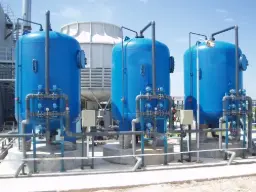
Media Filtration
Sand media filters remove large particles, algae and organic matter from surface water or canals. They operate under pressure, pushing water through graded sand or gravel layers that trap sediments down to 20 µm. Used ahead of drip and micro-sprinkler systems, these filters prevent emitter clogging and prolong downstream equipment life.
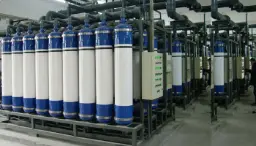
Ultrafiltration
Hollow-fiber ultrafiltration modules with pore sizes of 0.02–0.1 µm physically exclude suspended solids, colloids and pathogens from feed water. They produce low-turbidity filtrate for greenhouses and nurseries where biological contamination poses risks to high-value crops, and they serve as a robust barrier ahead of desalination units.
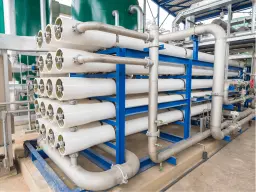
Reverse Osmosis
Semi-permeable polyamide membranes in spiral-wound modules operating at 12–25 bar reject up to 99 % of dissolved salts, silica and organics. Reverse osmosis (RO) yields low-conductivity permeate suitable for high-value vegetable or fruit crops sensitive to salinity. RO systems are often used to blend desalinated water with untreated water to achieve target electrical conductivity.
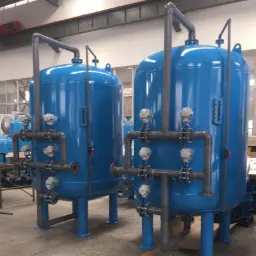
Ion Exchange
Cation and anion exchange resins exchange undesirable ions such as sodium, chloride and nitrate with hydrogen and hydroxide ions. Packed in pressure vessels, these resins polish water downstream of filtration and remove specific ions that cause sodicity or toxicity. Regeneration with brine or acid/caustic solutions restores capacity for continuous operation.
Treatment technologies work synergistically to transform raw water into a suitable irrigation supply. Filtration is the first line of defense, removing suspended solids that could foul membranes or clog emitters. Ultrafiltration provides a pathogen barrier and ensures consistent turbidity, while reverse osmosis and ion exchange reduce dissolved salts to target levels. Disinfection keeps distribution networks and root zones free of biofilm and disease-causing organisms. Selecting the right combination depends on feed water quality, irrigation method and crop sensitivity. Together, these systems create a robust treatment train that safeguards soil health, promotes uniform growth and maximizes equipment efficiency.
Key Water-Quality Parameters Monitored
Monitoring water quality for irrigation involves measuring chemical and physical parameters that influence plant growth and soil structure. Salinity, expressed as electrical conductivity (EC), reflects total dissolved salts and affects the osmotic potential of soil water. Low EC indicates minimal salt load, while high EC reduces water availability to plants. Sodium adsorption ratio (SAR) quantifies the balance between sodium and calcium plus magnesium ions; elevated SAR leads to soil dispersion and poor infiltration, especially in clay-rich soils. pH influences nutrient availability and indicates whether water is acidic or alkaline; the typical range of 6.5–8.4 is suitable for most crops. Alkalinity, expressed as carbonate and bicarbonate concentration, can cause scale formation and interference with nutrient uptake. Specific ions such as chloride, sulfate, boron and nitrate require regular monitoring because excessive levels cause phytotoxicity. Biological parameters, including total coliform and specific pathogens, are critical in greenhouse or hydroponic systems to prevent plant disease. Turbidity and suspended solids indicate physical cleanliness and the risk of emitter clogging.
Assessing these parameters helps farmers determine appropriate treatment steps. For instance, if EC exceeds moderate thresholds, blending or RO desalination becomes necessary. When SAR is high, gypsum addition or ion exchange can restore calcium and magnesium balance. pH adjustment using acid injection corrects alkalinity, preventing carbonate precipitation and maintaining nutrient solubility. When boron or chloride concentrations approach toxicity, targeted removal through selective resins or nanofiltration is implemented. Biological contamination triggers UV or ozone disinfection and periodic system flushing. Instrumentation such as conductivity meters, pH probes, flow totalizers and turbidity sensors provide continuous data for control systems. Sampling at source points and after each treatment stage ensures that each unit operation performs as designed and that the final water meets crop-specific requirements.
| Parameter | Typical Range | Control Method |
| pH | 6.5–8.4 | Acid or alkali dosing to adjust to neutral range |
| Electrical Conductivity (EC) | ≤0.75 dS/m (no restriction); 0.76–3 dS/m (moderate); >3 dS/m (severe) | Blending, reverse osmosis, controlled leaching |
| Total Dissolved Solids (TDS) | <500 mg/L (sensitive crops), 500–1500 mg/L (moderate) | Desalination via RO or nanofiltration |
| Sodium Adsorption Ratio (SAR) | <3 (low hazard), 3–9 (moderate), >9 (high hazard) | Gypsum amendment, ion exchange, blending |
| Chloride | <100 mg/L for most crops | Selective ion exchange, blending with low-chloride sources |
| Boron | 0.5–0.75 mg/L (sensitive), up to 2 mg/L (moderately tolerant) | Boron-specific resin, blending |
| Turbidity | <5 NTU for drip systems | Media filtration, disc filtration, ultrafiltration |
| Biological contaminants | Non-detectable for pathogens | UV disinfection, ozonation |
Design & Implementation Considerations
Designing an irrigation water treatment system begins with comprehensive source water characterization. Water samples should be analysed for salinity, SAR, hardness, alkalinity, specific ions and biological load to determine treatment needs. Flow requirements are calculated based on crop evapotranspiration rates, irrigation scheduling and future expansion. Site-specific constraints such as land availability, proximity to water sources and electricity supply influence system layout. Engineers must select unit operations that handle peak seasonal loads while providing redundancy for maintenance. Pre-treatment equipment like sedimentation ponds or settling tanks can reduce heavy load on downstream filters. Permitting and environmental impact assessments are essential, particularly when brine discharge from desalination or ion exchange regeneration is involved. Regulatory frameworks vary by region, but farmers often adhere to ISO 14001 environmental management principles to minimize ecological footprints, while greenhouse growers may follow ISO 22000 for food safety management when water contacts edible produce.
Material compatibility and robustness against corrosion are critical, especially in saline environments. Piping materials such as PVC, HDPE or stainless steel must be selected based on expected pH and chemical exposure. Pump sizing accounts for head losses across filters and membranes, and variable frequency drives improve energy efficiency by matching flow to demand. Integration with fertigation systems demands chemical-resistant injectors and mixing chambers that prevent precipitation. Control systems should include programmable logic controllers (PLCs) with fail-safes and alarms for key parameters. Sensors must be calibrated regularly, and data logging facilitates trend analysis and early detection of issues. Designers also plan for easy access to filters, membranes and UV lamps for routine maintenance. Build-in bypass lines and isolation valves allow components to be serviced without shutting down the entire system. When implementing reverse osmosis, brine management options include discharge to evaporation ponds, blending with drainage water or reuse for salt-tolerant crops, requiring careful assessment to avoid soil salinization. Lastly, training operators on standard operating procedures and emergency response ensures that technology investments translate into reliable performance.
Operation & Maintenance
Daily operation of irrigation water treatment systems involves monitoring instrumentation, adjusting chemical dosing and ensuring steady flows. Operators check feed pressure, differential pressure across filters and membranes, and note any deviations from setpoints. They collect samples for laboratory analysis to confirm that conductivity, pH and ion levels remain within target ranges. Automated controllers maintain 0.5 mg/L residual free chlorine or its equivalent when disinfection is required, and acid injection systems modulate dosing to keep pH near neutral. Backwashing schedule for sand or disc filters is typically weekly under average loading, but heavy sediment loads necessitate more frequent cycles to prevent clogging. Ultrafiltration modules undergo periodic air-scouring and backflushing to recover permeability. When transmembrane pressure reaches a threshold, chemical cleaning protocols using mild acids or detergents are initiated to dissolve fouling layers. Operators must record cleaning frequency and chemical consumption for performance tracking.
For reverse osmosis units, maintaining feed water temperature around 20 °C optimizes permeate output; seasonal variations may require adjustments. Antiscalant dosing prevents precipitation of sparingly soluble salts on membrane surfaces, and recovery rates should be adjusted to avoid scaling when source water is highly mineralized. Pressure vessels and piping are inspected for leaks, and high-pressure pumps receive lubrication according to manufacturer recommendations, often at monthly intervals. UV lamps lose intensity over time, so lamp replacement at 8 000–9 000 h ensures adequate microbial inactivation. Ozone generators require routine inspection of dielectric tubes and replacement of desiccant in air-drying systems. Ion exchange systems need timely regeneration; cycles depend on influent ion concentrations, but regeneration is commonly scheduled every 10 000 bed volumes or when effluent conductivity rises above a setpoint. Calibration of pH meters and conductivity sensors should be part of a monthly quality assurance program, using certified buffers and standards. Maintaining accurate logs supports predictive maintenance and helps identify patterns that indicate upcoming component failure. Training personnel on safety protocols and chemical handling reduces accidents and ensures consistent water quality delivery.
Challenges & Solutions
In irrigation water treatment, salinity management is a persistent challenge. Problem: High dissolved salt concentrations in feed water reduce crop yield and promote soil degradation. Solution: Combining reverse osmosis with blending strategies and controlled leaching helps maintain soil salinity below critical thresholds while optimizing water use efficiency. Another issue is scaling and fouling of membranes and emitters, driven by high hardness or suspended solids. Problem: Scale formation reduces membrane productivity and clogs small orifices in drip lines. Solution: Pre-treatment through media filtration, addition of antiscalants and regular acid cleaning mitigates scaling, while adopting self-flushing emitters reduces blockages in the field. Sodicity poses a serious risk when sodium predominates over calcium and magnesium. Problem: High SAR leads to clay dispersion and poor soil infiltration. Solution: Incorporating gypsum into soil, applying calcium-rich amendments and using ion exchange to reduce sodium in irrigation water maintains soil structure. Seasonal variability in source water quality adds complexity to system operation. Problem: Heavy rainfall events can introduce turbidity and microbial contamination, overwhelming treatment systems. Solution: Designing flexible treatment trains with adjustable flow rates and adequate settling capacity, together with real-time monitoring, allows operators to adapt quickly to changing conditions.
Energy consumption is a significant operating cost, especially for high-pressure processes. Problem: Running desalination units at high recovery increases energy use and greenhouse gas emissions. Solution: Employ energy-efficient pumps, recover energy through pressure exchangers, and schedule operation during off-peak electricity periods to reduce costs. Disposal of concentrate or waste brine is another environmental challenge. Problem: Improper discharge can salinize soils or waterways. Solution: Options include using evaporation ponds, blending concentrate with drainage water for salt-tolerant crops or exploring zero-liquid-discharge systems with crystallizers. Operator training and retention present soft yet critical challenges. Problem: Skilled personnel are required to manage complex treatment plants, and turnover can lead to knowledge gaps. Solution: Implement continuous training programs, create clear standard operating procedures and leverage remote monitoring to assist less experienced staff. Finally, meeting stringent food safety and environmental standards demands thorough documentation and traceability. Problem: Lack of compliance documentation can limit market access. Solution: Establish rigorous record-keeping, align practices with Global GAP and national regulations, and conduct regular internal audits to ensure sustained compliance.
Advantages & Disadvantages
The integrated treatment of irrigation water yields numerous benefits for agricultural enterprises. Clean, balanced water supports optimal plant growth by preventing salt stress and nutrient imbalances. By delivering uniform pressure and flow through drip or micro-sprinkler systems, treated water ensures precise fertigation, reduces fertilizer waste and minimizes runoff. Improvements in soil structure from low-sodium water enhance root penetration, microbial activity and long-term fertility. Treated water also protects equipment by reducing corrosion, scaling and biofouling, lowering maintenance costs and downtime. Adoption of treatment systems enhances resilience to drought by enabling the use of alternative sources like brackish groundwater or reclaimed wastewater. Furthermore, compliance with food safety and environmental standards unlocks premium markets and satisfies consumer expectations.
However, these advantages come with trade-offs. Capital investment in filtration, membrane desalination and disinfection equipment can be substantial, requiring careful economic analysis. Operating costs, particularly energy and chemical consumption, can be high, and specialized maintenance expertise is necessary. Treatment processes generate waste streams such as backwash water and brine that must be managed responsibly. Over-treatment may strip essential nutrients, necessitating nutrient supplementation. Some technologies are sensitive to fluctuations in feed water quality and require robust monitoring systems. Balancing these factors requires growers to align treatment strategies with crop value, water availability and long-term sustainability goals.
| Pros | Cons |
| Improved crop yield and quality through controlled salinity and nutrient balance | High capital expenditure for treatment equipment |
| Protection of irrigation infrastructure from clogging, scaling and corrosion | Elevated operating costs due to energy and chemical use |
| Ability to utilize marginal water sources and enhance drought resilience | Necessity to manage waste streams like brine or backwash |
| Compliance with food safety and environmental standards | Requirement for skilled operation and ongoing maintenance |
| Enhanced soil health and long-term farm sustainability | Risk of over-treatment removing beneficial minerals |
Frequently Asked Questions
Question: How does irrigation water salinity affect crop growth?
Answer: Salinity increases the osmotic pressure in the soil, making it more difficult for plant roots to extract water. High electrical conductivity reduces the availability of water to plants, causing physiological drought even when soils appear moist. Sensitive crops may exhibit leaf burn, stunted growth and reduced yields. Managing salinity through blending, leaching and desalination helps maintain water potentials that support healthy crop development.
Question: What is the sodium adsorption ratio and why is it important?
Answer: The sodium adsorption ratio (SAR) compares the concentration of sodium ions to that of calcium and magnesium ions in irrigation water. A high SAR indicates that sodium dominates, which can lead to soil dispersion, reduced infiltration and poor aeration. Maintaining SAR below 3 in irrigation water typically avoids sodicity issues, while values above 9 require corrective measures such as gypsum application or ion exchange treatment to maintain soil structure.
Question: Do all irrigation systems need reverse osmosis desalination?
Answer: Not necessarily. Reverse osmosis is beneficial when feed water has high salinity or specific ion concentrations that exceed crop tolerance levels. For moderately saline water or salt-tolerant crops, blending or partial treatment may suffice. RO systems involve significant investment and operational costs, so their use should be justified by crop sensitivity, water availability and economic return.
Question: How often should filtration systems be backwashed?
Answer: The frequency depends on the sediment load and filter type. For sand media filters, backwashing is commonly performed on a weekly schedule or when differential pressure reaches a manufacturer-specified limit. Disc and screen filters with automatic backwash features may cycle more frequently during high turbidity events. Monitoring pressure drop across filters ensures that backwashing is triggered before clogging impairs flow.
Question: Can treated irrigation water be used for organic farming?
Answer: Yes, provided the treatment process complies with organic regulations. Physical treatments like filtration, membrane separation and UV disinfection are generally acceptable. Chemical additives must be approved for organic production, and residual chemicals in treated water cannot compromise soil biodiversity or crop certification. Growers should consult their certification body to ensure that all treatment components align with organic standards.
Question: What measures minimize operational costs of water treatment systems?
Answer: Energy efficiency is achieved by selecting high-efficiency pumps, recovering pressure energy in RO systems, and operating during off-peak electricity periods. Preventive maintenance, such as timely filter backwashing and membrane cleaning, preserves performance and reduces unplanned downtime. Optimizing chemical dosing through real-time monitoring prevents waste. Using renewable energy sources like solar power can further reduce operating expenses and enhance sustainability.