Aquaculture Water Treatment
Modern fish farming depends on water that supports the biological needs of cultured species and the microbes that process their waste. In commercial operations the rearing tank functions as both a habitat and a waste container, so the water must be continually conditioned to remove toxic metabolites and replenish dissolved gases. Aquaculture water treatment is the set of engineered methods that clean, condition, and aerate water in fish culture systems to keep it safe for fish and other aquatic organisms. This integrated process uses mechanical screens to remove uneaten feed, biological filters to convert toxic ammonia into nitrate, and aeration devices to maintain dissolved oxygen. Water treatment also includes controlling pH, temperature, and mineral balance so that fish metabolism and feeding remain optimal. In recirculating systems where water is reused many times, these tasks become even more critical because waste compounds accumulate quickly.
The business value of effective water treatment lies in protecting stock health and maximizing growth rates. Inadequate filtration leads to elevated ammonia and nitrite, which impair gill function and suppress immunity; dissolved oxygen deficits reduce feed conversion efficiency; and unstable pH stresses fish and nitrifying bacteria. Water conditioning interventions such as aeration, degassing, and buffering maintain parameters within typical target ranges described later in this article. High-quality water reduces disease outbreaks, minimizes mortality, and ensures uniform product quality. It also improves feed utilization, allowing producers to reach market size faster and with less feed, which reduces waste loading on the environment. Without reliable water treatment, high stocking densities become impossible, and the economic benefits of intensive aquaculture decline sharply. In short, conditioning water is not just an operational requirement—it is the core process that underpins the productivity and sustainability of fish farms.
Water Treatment Systems Used in Aquaculture
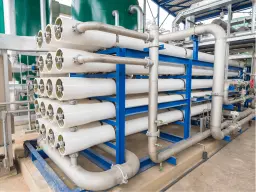
Protein Skimmers and Foam Fractionators
Foam fractionation devices, commonly known as protein skimmers, remove dissolved organic compounds by creating fine bubbles that attract hydrophobic molecules. As bubbles rise, they form foam that carries waste to a collection cup. By eliminating dissolved organics early, protein skimmers reduce biological oxygen demand and lighten the load on downstream filters. They are particularly effective in saltwater systems where foam formation is easier.
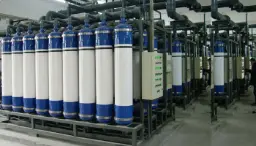
Biofiltration Media (MBBR)
High-surface-area media housed in moving bed bioreactors provide a colonization platform for nitrifying bacteria. As water circulates through the reactor, bacteria convert ammonia to nitrite and then to nitrate via two-step nitrification. The media are kept in motion by aeration or mechanical agitation to ensure uniform contact between bacteria and water and to slough off excess biomass. These reactors operate with volumetric loading rates tailored to feed inputs and are essential for maintaining non-toxic nitrogen species in recirculating systems.
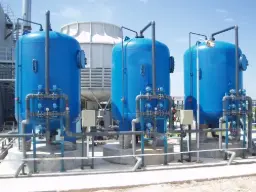
Activated Carbon Filters
Activated carbon filters adsorb dissolved contaminants such as pigments, odours, and residual ozone. Granular media filters (e.g., sand or anthracite) capture fine suspended solids that escape drum filters. These polishing steps improve water clarity and prepare water for reuse or discharge. Carbon media require periodic replacement to prevent desorption of captured compounds.
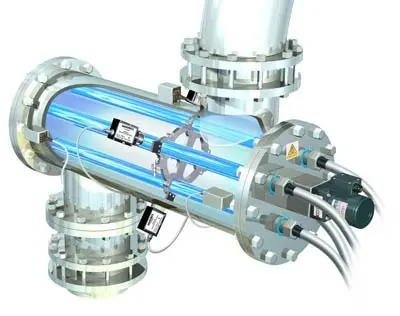
UV Sterilisation Units
Disinfection units protect cultured fish from opportunistic pathogens by reducing microbial loads. Ultraviolet (UV) lamps expose water to germicidal wavelengths that inactivate bacteria, viruses, and parasites. Ozone generators inject ozone gas into contact chambers, where it oxidises organic matter and disinfects water. Both methods reduce the risk of disease transmission and improve water clarity, but they must be carefully sized to avoid residual oxidants entering fish tanks.
After solids removal, nitrification, aeration, disinfection, and polishing, treated water is returned to culture tanks with characteristics similar to source water. Using a combination of these systems ensures that particles, dissolved organic matter, and pathogens are sequentially removed or neutralised. Mechanical screens and drum filters prevent solids from overwhelming biofilters; biofilters convert toxic nitrogen compounds into relatively benign nitrate; aeration and oxygen injection balance oxygen supply with demand; and disinfection units maintain low pathogen loads. Each component addresses a specific contaminant class, and together they enable fish farmers to maintain stable water quality despite high feeding rates and stocking densities.
Key Water‑Quality Parameters Monitored
Maintaining optimal water chemistry requires close monitoring of a suite of variables. Dissolved oxygen (DO) underpins respiration and nitrification; concentrations should remain above 5 mg/L for warm‑water species and higher for cold‑water species. Temperature influences metabolism, oxygen solubility, and nitrification rates; most cultured fish thrive between 20 °C and 30 °C, and small fluctuations outside species‑specific ranges can cause stress. pH affects the toxicity of ammonia and the performance of nitrifying bacteria; in recirculating systems it is typically maintained between 6.5 and 8, with the lower end favored when ammonia detoxification is critical. Ammonia (total ammonia nitrogen, TAN) originates from fish excretion and decomposing feed; values below 1 mg/L are considered typical and safe. Nitrite, the intermediate in nitrification, is toxic at low concentrations; typical target levels are below 1 mg/L, and concentrations above 5 mg/L cause brown blood disease.
Nitrate accumulates as the end product of nitrification; while less toxic than ammonia and nitrite, high nitrate (>100 mg/L) can suppress growth and requires dilution via plant uptake or water exchange. Alkalinity and hardness provide buffering capacity and essential minerals; alkalinity is usually maintained between 50 and 150 mg/L as CaCO₃ to support nitrification and stabilise pH. Salinity is relevant in brackish and marine systems and affects osmoregulation; typical salinity for many marine fish ranges from 20 to 35 ppt, while freshwater systems may add 1–3 ppt salt to mitigate nitrite toxicity. Turbidity and suspended solids impair fish respiration and reduce UV disinfection efficiency; clarity is restored through proper filtration. Dissolved carbon dioxide accumulates from respiration and nitrification; high concentrations (>12 mg/L) can depress pH and interfere with gas exchange. Oxidation‑reduction potential (ORP) provides a general measure of water oxidation state and is used to control ozone dosing; typical ORP values in well‑managed systems range from 250 mV to 350 mV. Conductivity and total dissolved solids (TDS) give an overall view of ionic content and help identify accumulation of minerals over time. Regular measurement of these parameters allows operators to make targeted adjustments before water quality deteriorates.
| Parameter | Typical Range | Control Method |
| Dissolved Oxygen (DO) | >5 mg/L | Increase aeration or oxygen injection; reduce stocking density |
| pH | 6.5–8 | Add buffering compounds (bicarbonates) or control carbon dioxide stripping |
| Temperature | 20–30 °C | Use heaters, chillers, insulation, or shading as appropriate |
| Total Ammonia Nitrogen (TAN) | <1 mg/L | Adjust feeding rate, enhance biofiltration, perform water exchange |
| Nitrite | <1 mg/L | Maintain healthy biofilter, add low‑level salt (1–3 ppt), increase aeration |
| Nitrate | 5–150 mg/L | Promote plant uptake, schedule partial water exchanges |
| Alkalinity | 50–150 mg/L as CaCO₃ | Dose sodium bicarbonate or crushed coral to maintain buffering capacity |
| Salinity | 0–35 ppt (species‑dependent) | Adjust with seawater blends or rock salt, monitor evaporation and dilution |
| Turbidity | <5 NTU | Backwash filters, increase mechanical filtration, manage feed distribution |
| Oxidation‑Reduction Potential (ORP) | 250–350 mV | Control ozone dosing, ensure sufficient organic load for safe ORP |
Design & Implementation Considerations
Designing an aquaculture water treatment system requires balancing biological needs, hydraulic constraints, and economic realities. Engineers start by defining the maximum biomass and feeding rate the facility will support, since these determine waste production and oxygen demand. Tank volumes, flow rates, and recirculation ratios are sized to ensure complete mixing and to deliver treated water back to the fish before quality declines. Hydraulic residence time in biofilters must support nitrifying bacteria yet prevent anaerobic zones; typical loading rates are tied to feed input, with around 0.1–0.2 kg of feed per cubic meter of biofilter volume per day. Mechanical filters are sized based on solids capture efficiency and backwash frequency; undersized units lead to rapid clogging and elevated suspended solids. Aeration devices must deliver oxygen transfer rates that exceed combined consumption by fish and microorganisms, factoring in reduced solubility at higher temperatures.
Layout considerations include sequencing treatment units to minimize headloss and provide easy access for maintenance. Drains and piping should enable complete flushing of each component to remove accumulated sludge. Redundancy is critical: duplicate pumps, blowers, and power supplies prevent catastrophic loss of aeration or circulation in the event of a failure. Instrumentation plays a central role in automated control; sensors for oxygen, pH, temperature, and oxidation‑reduction potential feed data to controllers that adjust aeration intensity, dosing pumps, and alarms. ISO 22000 food safety management and Codex guidelines for aquaculture require that water sources be protected from contamination and that equipment be hygienically designed; materials must be corrosion resistant and compatible with disinfectants. Designers also consider energy efficiency because aeration and pumping account for most operational costs; selecting high‑efficiency blowers, variable‑speed drives, and gravity‑fed components reduces energy consumption.
Site selection influences system design. Access to high‑quality source water reduces pretreatment needs, whereas surface water may require carbon filtration or sedimentation. Climate determines whether heating or cooling systems are necessary and influences insulation requirements for tanks and piping. In integrated aquaponics systems, plant nutrient requirements affect water exchange rates and nitrification capacity. To achieve reliable start‑up, new systems are typically cycled for several weeks before stocking fish; during this period, nitrifying bacteria are established using either seeded biofilter media or controlled addition of ammonia. Proper commissioning involves verifying flow balances, testing emergency power systems, and calibrating sensors. Operators must document design parameters, operating limits, and emergency procedures to comply with regulatory frameworks and quality standards.
Example calculation of oxygen demand can help size aeration systems. Suppose a recirculating tank holds 10 000 L of water and contains 200 kg of fish with an oxygen demand of 200 mg O₂ kg⁻¹ h⁻¹. Using the mass balance formula for oxygen consumption (oxygen demand = fish mass × specific consumption), the total oxygen consumption is 40 000 mg O₂ h⁻¹ (40 g O₂ h⁻¹). This figure guides the selection of blowers or oxygen generators to ensure dissolved oxygen does not fall below the minimum target during peak feeding.
Operation & Maintenance
Routine operation involves continuous monitoring and small adjustments to keep the system within target ranges. Operators start each day by checking critical readings on dissolved oxygen, temperature, pH, and oxidation‑reduction potential. If DO drops near the minimum threshold, aeration is increased immediately and feeding is reduced. Automatic feeders are programmed to distribute feed evenly, and staff observe fish behavior to gauge appetite; overfeeding leads to increased waste and must be avoided. Weekly mechanical filter backwashing prevents solids accumulation that could clog media and reduce flow. Sludge collected during backwashing is removed from the system and disposed of or used for fertilizer.
Calibration of sensors is fundamental to data reliability. Probes for oxygen, pH, and ORP require calibration against standard solutions every month or as recommended by the manufacturer. Temperature sensors are checked against a certified thermometer, and malfunctioning probes are replaced promptly. Pumps and blowers require inspection for vibration, noise, and bearing wear; preventive maintenance schedules call for lubrication and belt replacement at fixed intervals. UV sterilizer lamps gradually lose output and are typically replaced annually to ensure adequate germicidal dose. Ozone generators need periodic cleaning of electrodes and monitoring of off‑gas concentrations to protect operators and fish.
Monitoring extends beyond equipment to water chemistry. Ammonia, nitrite, and pH are tested daily during the initial cycling of new biofilters and during periods of high feeding; once the system stabilizes, testing frequency can be reduced to twice per week for established systems. Alkalinity is measured weekly in high‑density operations to ensure sufficient buffering; sodium bicarbonate is dosed when alkalinity falls below the lower target. Dissolved oxygen sensors provide continuous data, but manual spot checks with calibrated meters validate the readings. Turbidity and suspended solids are measured visually or with meters; high turbidity triggers checks on feeding practices and filter performance. Operators record all measurements in logbooks or digital databases, which support trend analysis and early detection of issues.
Emergency preparedness is part of maintenance planning. Backup generators or battery systems keep pumps and aerators running during power outages. Spare pumps, blowers, and filter media are kept on site to allow rapid replacement of failed components. Staff receive training in responding to alarm conditions, such as oxygen depletion or pH excursions. Alarms are set to activate before parameters reach dangerous levels, giving time to intervene. Good housekeeping practices, including cleaning tank walls, removing biofouling from pipelines, and controlling pests, contribute to consistent water quality. Maintaining clear standard operating procedures ensures that daily tasks are performed consistently, even when personnel change.
Challenges & Solutions
Water treatment in intensive aquaculture faces recurring challenges that require proactive solutions. Problem: Sudden spikes in ammonia often occur after feeding or when a biofilter is not fully cycled, exposing fish to toxic conditions. Solution: Reduce feed input temporarily, increase aeration to support nitrifiers, and add mature biofilter media or nitrifying bacterial cultures to boost conversion of ammonia to nitrite and nitrate. Adjusting the stocking density and performing a partial water exchange can also help lower TAN levels. Monitoring pH and alkalinity concurrently is important because nitrification consumes alkalinity and can lead to acidification, which inhibits nitrifying bacteria.
Another common issue is dissolved oxygen depletion, particularly during hot weather when oxygen solubility decreases. Problem: Low DO levels lead fish to gasp at the surface and impair biofilter performance. Solution: Activate backup aeration systems, reduce feeding, and, if available, inject pure oxygen through cones or diffusers. Long‑term solutions include adding redundant aerators, optimizing tank hydraulics to improve mixing, and scheduling feeding during cooler times of day when oxygen solubility is higher. Keeping emergency oxygen cylinders on site provides immediate relief during extreme events.
pH fluctuations can destabilize nitrification and stress fish. Problem: Acidic conditions arise when carbon dioxide accumulates or alkalinity is consumed, while alkalinity spikes can occur if excessive base is added. Solution: Implement regular alkalinity measurements and dose sodium bicarbonate incrementally to maintain the buffer within the target range; monitor carbon dioxide stripping efficiency in degassing units; and adjust aeration or venting to remove excess CO₂. For alkaline swings, reduce or pause buffering additions and allow nitrification to naturally consume alkalinity, or perform a partial water exchange with lower‑alkalinity water.
Equipment failures also threaten water quality. Problem: Pump or blower breakdown can halt circulation and aeration, causing rapid deterioration. Solution: Install duplicate pumps and blowers with automatic changeover capabilities, test backup power supplies regularly, and maintain a stock of critical spare parts. Employ continuous monitoring with alarms to notify operators immediately when a component fails. Scheduling preventive maintenance based on running hours rather than calendar days helps anticipate wear and reduces unplanned downtime.
Biosecurity challenges arise from the introduction of pathogens with new fish or contaminated equipment. Problem: Disease outbreaks can spread rapidly in recirculating systems, compromising entire batches. Solution: Enforce quarantine protocols for incoming stock, disinfect nets and tools between tanks, and integrate UV or ozone disinfection into the treatment train. When disease is detected, isolate affected tanks, consult with aquatic animal health specialists, and treat with approved therapeutics following withdrawal periods. Good biosecurity reduces the frequency and severity of problems, preserving animal welfare and production efficiency.
Advantages & Disadvantages
Adopting comprehensive water treatment in aquaculture offers numerous advantages that align with the goals of sustainable agriculture. High‑quality water supports fish health, leading to improved growth rates, better feed conversion ratios, and lower mortality. Recirculating systems reduce water consumption by reusing treated water many times, decreasing the environmental footprint and permitting operation in areas with limited water supply. Advanced treatment technologies, such as biofilters and oxygen injection, enable higher stocking densities, maximising the productive use of space and infrastructure. Effective waste management minimises the discharge of nutrients and solids into natural water bodies, helping farms meet regulatory requirements and protect surrounding ecosystems. Real‑time monitoring and automation improve operational control and reduce labour costs, allowing managers to focus on optimisation rather than troubleshooting.
However, there are disadvantages that operators must weigh. The initial capital investment for tanks, filters, pumps, and control systems is significant, and financing can be a barrier for small producers. Energy consumption is high compared with extensive pond culture, as pumps and aerators run continuously; rising energy costs can erode profitability. Technical complexity demands skilled staff to operate, maintain, and troubleshoot equipment, and training is an ongoing need. A breakdown of critical components can lead to rapid fish losses, underscoring the need for redundancy and emergency preparedness. Managing concentrate waste streams, such as backwash water laden with solids and nutrients, requires proper disposal or treatment. Balancing these pros and cons helps decision‑makers choose the right level of technology for their circumstances.
| Advantages | Disadvantages |
| Improved growth rates and feed conversion | High initial capital cost |
| Reduced water consumption through recirculation | Continuous energy demand |
| Higher stocking densities supported | Need for skilled operators |
| Lower environmental discharge of nutrients | Potential for rapid losses during failures |
| Enhanced biosecurity and disease control | Management of concentrated waste streams |
Frequently Asked Questions
Question: Why is controlling ammonia levels so important in fish farming?
Answer: Ammonia is excreted by fish and released from uneaten feed, and its un‑ionized form is highly toxic to gill tissues. Even at concentrations below 1 mg/L, it can irritate fish and suppress immune function, while higher levels cause lethargy, reduced feeding, and mortality. By maintaining a healthy biofilter and monitoring feeding rates, farmers convert ammonia into less harmful nitrate and keep levels within safe bounds. Proper pH control also helps because lower pH shifts ammonia into its less toxic ammonium form. Consistent monitoring allows operators to respond quickly when ammonia levels start to rise.
Question: How often should water quality be tested in a recirculating system?
Answer: During the start‑up phase or whenever the feeding rate changes, critical parameters such as ammonia, nitrite, pH, and alkalinity should be measured daily, while dissolved oxygen should be checked several times each day. As the system stabilises, testing frequency can be reduced; for mature systems with stable loads, operators often test ammonia and nitrite twice per week and pH and alkalinity once per week. Dissolved oxygen sensors provide continuous data, but periodic manual checks ensure accuracy. Temperature and salinity are typically monitored continuously with automated sensors. Keeping detailed records helps identify trends and anticipate problems.
Question: What role does alkalinity play in water treatment, and how is it maintained?
Answer: Alkalinity represents the water’s capacity to neutralize acids, acting as a buffer that stabilises pH during nitrification. As nitrifying bacteria convert ammonia to nitrate, they consume alkalinity, which can lead to pH drops if not replenished. Maintaining alkalinity within a typical range of 50–150 mg/L as CaCO₃ ensures that pH remains stable and biofilters operate efficiently. Operators add buffering agents such as sodium bicarbonate or crushed coral to replenish alkalinity when measurements fall toward the lower limit. Regular testing helps prevent sudden changes that could stress fish and compromise the biofilter.
Question: Are ozone and UV sterilisation necessary in all systems?
Answer: Disinfection technologies such as ozone and UV sterilisation are particularly beneficial in high‑density recirculating systems where disease transmission can occur rapidly. They reduce microbial loads, improve water clarity, and assist in controlling parasites and algae. However, smaller or flow‑through systems with lower densities may not require such intensive disinfection if water exchange rates and biosecurity practices are sufficient. The decision depends on stocking density, pathogen pressure, and the value of the cultured species. When used, these technologies must be sized correctly to achieve disinfection without leaving harmful residues.
Question: How do recirculating systems compare with traditional pond culture in terms of sustainability?
Answer: Recirculating aquaculture systems reuse water many times, significantly reducing water withdrawal compared with pond culture, which typically depends on continuous flow or periodic drainage. This conserves freshwater resources and allows farms to operate in regions with limited water availability or in proximity to urban centres. Waste streams from recirculating systems are concentrated and easier to capture and treat, reducing nutrient discharge to the environment. However, the energy footprint of recirculating systems is higher due to continuous pumping and aeration, and the requirement for skilled management may limit adoption in some settings. When designed and operated effectively, recirculating systems provide a sustainable option for intensive fish farming.
Question: What steps should be taken when dissolved oxygen suddenly drops during peak feeding?
Answer: If dissolved oxygen levels decline sharply while fish are feeding, the first step is to reduce or suspend feeding to lower oxygen demand. Operators should immediately activate additional aeration or pure oxygen injection systems to restore concentrations above the safe limit. Checking that mechanical filters are not clogged and that pumps and blowers are functioning properly is also essential. After stabilizing oxygen levels, review feeding schedules to avoid simultaneous oxygen peaks and consider increasing aeration capacity to handle future demand. Continual monitoring helps prevent such events from escalating into emergencies.
Question: How can solids from backwashing and sludge removal be managed sustainably?
Answer: Solids collected from drum filters and biofilter backwashing are rich in organic matter and nutrients. Rather than discharging them untreated, they can be concentrated in settling basins or sludge dewatering units and then applied as fertilizer in agriculture or composted. In some integrated operations, sludge is digested anaerobically to produce biogas and nutrient‑rich effluent. Managing these waste streams responsibly not only reduces environmental impact but also creates additional value from the aquaculture operation. Compliance with local regulations regarding waste handling and land application is crucial when implementing these practices.