Ballast Water Treatment
Ballast water is essential to maritime operations because it stabilises ships when cargo loading is uneven or when vessels sail empty. Without controlled ballasting, hulls are strained and propulsion efficiency drops. In the maritime sector, ballast water treatment is the practice of taking seawater onboard for stability, treating it to remove invasive organisms and contaminants, and discharging it in compliance with environmental regulations. Managing this water is not as simple as pumping it in and out; it demands an engineered treatment system that deals with variable water quality, changing ship schedules, and strict international rules. The International Maritime Organization (IMO) and port-state authorities require that discharges be essentially free of harmful aquatic species and have total residual oxidants below specific levels. If untreated, ballast water can become a vector for organisms such as zebra mussels, comb jellies, and green crabs which drastically alter ecosystems. Removing these biological threats before discharge is the core purpose of ballast water management, and it involves filtration, disinfection, monitoring, and careful record‑keeping.
The business value of ballast water treatment in shipping extends well beyond regulatory compliance. Ships that discharge untreated ballast water can be fined, detained or even barred from ports. Invasive species also create long‑term ecological damage that leads to costly controls and remediation at receiving ports. Well‑designed ballast water management systems therefore protect vessel owners from legal liability and safeguard future trade. However, the process introduces risks; high salinity and suspended solids can foul filters, chemical doses may corrode tanks, and mismanagement could injure crew or damage cargo. Water treatment intervenes by removing sediments with strainers, disinfecting microorganisms with oxidants or ultraviolet (UV) light, and neutralising residual chemicals prior to discharge. Treatment systems often incorporate sensors for parameters like salinity, pH, dissolved oxygen, turbidity, and total residual oxidants (TRO) to ensure that conditions remain within safe limits. A typical TRO discharge limit is less than 0.1 mg/L of chlorine equivalent as mandated by the IMO, and pH values in ballast tanks often range from 7.5 to 8.4. Balancing these water‑quality goals with operational flexibility is a hallmark of successful ballast water management.
Water Treatment Systems Used
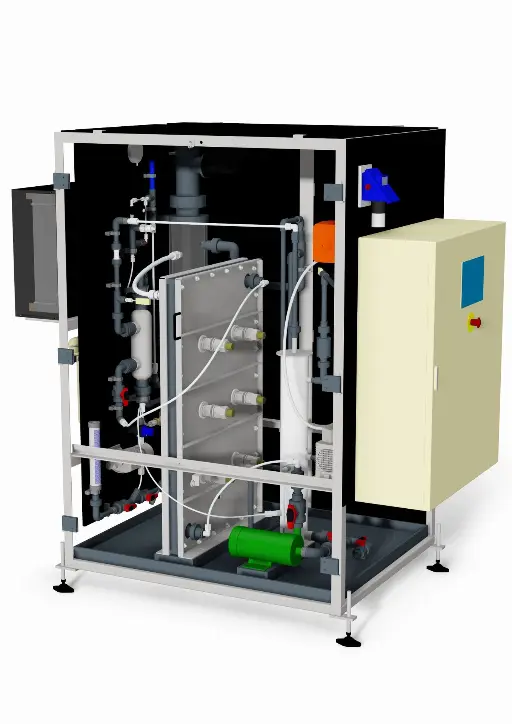
Electrochlorination
An electrochlorination ballast water treatment unit applies an electric current to a portion of seawater to generate hypochlorite and other oxidants. These chemicals are injected into the main ballast stream to inactivate organisms. The method is particularly suited to vessels with high flow rates, such as tankers and bulk carriers, because it generates disinfectant on demand and reduces the need to store hazardous chemicals. A neutralisation step or holding time is included to bring the TRO level below the discharge limit prior to releasing water.
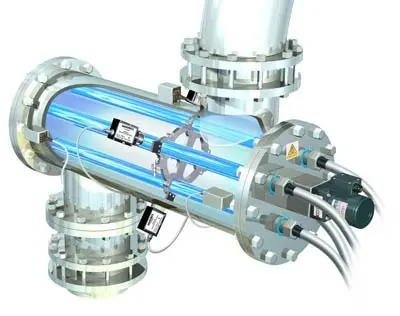
UV Disinfection
Ultraviolet disinfection uses high‑intensity UV lamps to damage the DNA of plankton, bacteria and larvae. It is often combined with filtration to remove larger sediments that would otherwise shield organisms from the light. UV systems perform best with clear water at low turbidity and are common on container ships and medium‑sized vessels that require compact installations. They do not leave chemical residuals, so neutralisation is unnecessary, though lamp maintenance and power consumption must be managed.
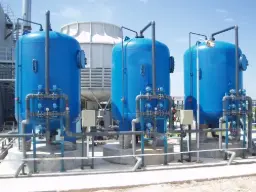
Filtration and Hydrocyclones
Mechanical filtration is the first barrier in many ballast water treatment systems. Automatic backwashing filters remove particles larger than 50 µm, and hydrocyclones help to separate heavier sediments. By lowering turbidity and total suspended solids, filtration improves the efficiency of downstream UV or chemical disinfection. Filtration systems must handle variable water clarity, from clear ocean water to coastal silt, and they are often sized to match the ballast pump capacity.
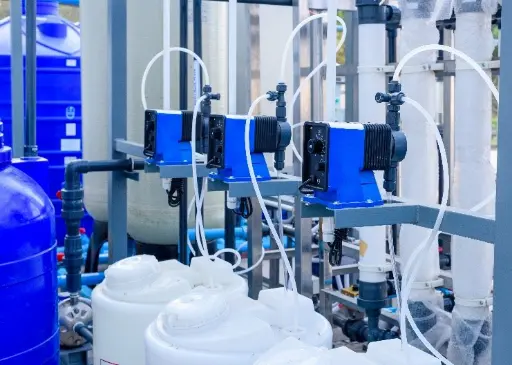
Chemical Injection
Some ballast water management systems rely on chemical biocides that are stored onboard and injected into the ballast stream. Products such as chlorine dioxide or glutaraldehyde are metered at controlled doses to achieve microbial kill. After the required holding time, neutralising agents are added to reduce the disinfectant to safe levels. Chemical injection offers flexibility but requires storage of hazardous materials and strict crew training.
The diversity of treatment systems reflects the variety of ship types and operational profiles. Chemical‑based approaches like electrochlorination and ozone provide strong disinfection at high flow rates, while UV and advanced oxidation are favoured when chemical residuals must be avoided. Mechanical filtration is universally applied because it enhances any downstream process by reducing turbidity. Deoxygenation offers a passive option for long voyages, though it may not meet discharge standards without supplementation. Selecting the right combination hinges on ballast capacity, pumping rates, space constraints, power availability, and the regulatory regimes along trade routes. Integrating these systems ensures that water quality targets, such as low organism counts and TRO levels below 0.1 mg/L are achieved under real‑world operating conditions.
Key Water‑Quality Parameters Monitored
Monitoring water quality is integral to ballast water management because it provides continuous feedback on the effectiveness of treatment and guides operational adjustments. One of the most critical parameters is salinity, which affects the performance of both electrolytic and ultraviolet systems. Ballast water taken from oceans can have salinities from 17.5 to 36.5 practical salinity units, and some vessels may occasionally ballast with brackish or freshwater. Accurate salinity readings help operators adjust electrochlorination current or dosing to maintain oxidant production and avoid generating excess hydrogen gas. pH is another important factor; ballast water generally has a pH between 7.5 and 8.4, but chemical treatment can lower pH during disinfection and raise it during neutralisation. Keeping pH within a typical operational window of 6.5–9.0 helps to protect tank coatings and maintain disinfectant efficacy. Temperature influences chemical reactions and UV transmission; cooler water may require longer contact times or higher doses to achieve the same microbial kill. Dissolved oxygen levels indicate whether deoxygenation systems are achieving their intended anaerobic conditions; seawater usually contains 7–8 mg/L of oxygen at surface conditions, but deoxygenation aims to reduce this to less than 2 mg/L. Turbidity and total suspended solids reflect the clarity of the water and can range from less than 1 NTU in clear open ocean water to over 10 NTU near ports; high turbidity necessitates pre‑filtration to protect UV and ozone systems from fouling.
Microbial indicators are also monitored. The IMO’s D‑2 Standard sets limits on organism concentration: fewer than 10 viable organisms per cubic metre larger than 50 µm and fewer than 10 viable organisms per millilitre between 10 and 50 µm. It also requires indicator microorganisms such as Escherichia coli and Vibrio cholerae to be below specified colony forming unit (CFU) counts. Total residual oxidant (TRO) concentration is monitored continuously in electrochlorination or chemical injection systems. A typical limit for discharge is less than 0.1 mg/L of chlorine equivalent, and typical systems maintain TRO between 2 and 10 mg/L during the ballasting phase and reduce it to below 0.1 mg/L before discharge. Operators also track oxidation–reduction potential (ORP) to gauge the disinfectant strength of oxidising treatments, with values often maintained between 300 and 800 mV. Specific conductivity indicates the total dissolved solids; seawater has conductivities around 45–55 mS/cm, and sudden changes might hint at fresh water intrusion or sensor drift. Together, these parameters provide a comprehensive picture of the water being processed and help the crew validate compliance with treatment performance standards.
| Parameter | Typical Range | Control Method |
| Salinity (PSU) | 17.5 – 36.5 PSU | Adjust electrochlorination current; select appropriate treatment mode |
| pH | 6.5 – 9.0 (natural seawater 7.5 – 8.4) | Use buffering agents; monitor during dosing and neutralisation |
| Dissolved Oxygen (mg/L) | 7 – 8 mg/L (natural); < 2 mg/L during deoxygenation | Inject inert gas; measure with optical sensors |
| Turbidity (NTU) | 1 – 10 NTU typical | Implement pre‑filtration; backwash filters regularly |
| Total Residual Oxidant (mg/L) | 2 – 10 mg/L during treatment; < 0.1 mg/L at discharge | Dose oxidants via electrolysis or injection; neutralise with reducing agents |
| Microbial Counts | < 10 viable > 50 µm per m³; < 10 viable 10–50 µm per mL | Sample water; use flow cytometry or microscopy |
| Oxidation–Reduction Potential (mV) | 300 – 800 mV | Adjust oxidant dosing; calibrate sensors |
Design & Implementation Considerations
Designing a ballast water management system involves aligning treatment performance with the realities of shipboard installation and operation. Ship owners first assess the ballast capacity and flow rate; large tankers may require systems that handle hundreds of cubic metres per hour, whereas small coastal vessels may manage only tens. This sizing affects equipment footprint, power consumption, and capital cost. Vessels must also consider the available space in machinery rooms and on deck; retrofits require detailed 3D scanning to integrate piping, filters, generators, and reactors without disrupting cargo operations. International standards such as the IMO Ballast Water Management Convention and the U.S. Coast Guard regulations influence design choices; systems must be type‑approved to meet performance criteria like the D‑2 Standard for organism removal. Some port states also enforce stricter controls on specific pathogens or chemical residuals, so designers often incorporate redundant monitoring points and sampling connections. In addition, classification societies issue guidelines for materials and piping arrangements to resist corrosion from oxidants or ozone and to ensure safe venting of gases.
Power availability is a critical design factor because treatment units draw electrical energy for pumps, UV lamps, electrolysis cells, and controls. Ships with limited excess generation capacity may prefer chemical injection systems that consume less electricity but need storage space and safety measures for hazardous chemicals. Designers also evaluate the effects of treatment on existing ballast pumps and valves; high head losses from filters can reduce pump efficiency, so filters with automatic backwash and low pressure drop are favoured. Filtration should be sized to handle the worst‑case sediment load encountered during port operations. For electrolytic or ozone systems, gas management is essential. Hydrogen produced during electrochlorination must be vented safely, requiring gas separators and explosion‑proof blowers. Ozone systems need off‑gas destruct units and corrosion‑resistant materials. UV systems require ballasting water to remain within a certain UV transmittance range; pretreatment may include coagulants to reduce color or organic matter.
It is also necessary to integrate treatment controls with the ship’s automation system. Programmable logic controllers (PLCs) manage flow pacing, chemical dosing, filtration backwash, and sensor alarms. Integration with the vessel’s voyage data recorder ensures that ballast operations are logged, satisfying reporting requirements. Designers specify redundancy for critical sensors, especially for TRO and ORP measurements, to maintain compliance if one sensor fails. Ballast water management plans must be updated to reflect new operational procedures, holding times, and neutralisation steps, which must then be approved by flag authorities. Ultimately, careful design yields a system that maintains high removal efficiency, keeps residual oxidants below 0.1 mg/L, and fits within the physical and operational constraints of the ship.
Operation & Maintenance
Operating a ballast water management system demands attentive crew practices and adherence to procedures. Before ballasting, crew should inspect filters and strainers and perform a weekly backflush to remove accumulated sediments; mechanical filtration is the first line of defence against turbidity. During electrochlorination or chemical dosing, operators must monitor TRO levels continuously and adjust dosing setpoints to maintain kill efficacy while avoiding overdosing. For example, systems may maintain oxidant concentrations between 2 and 10 mg/L, then neutralise to below 0.1 mg/L at discharge, UV systems require operators to regularly clean quartz sleeves, typically every three months, to prevent fouling and to replace lamps after 8 000 hours of operation. In ozone and AOP systems, venting lines and destruct units must be inspected monthly for leaks, and catalytic destruct media should be replaced annually.
Calibration and sensor maintenance are vital. TRO and ORP sensors should be calibrated monthly against standard solutions to ensure accurate readings. Flow meters and pressure gauges on filters and reactors help detect fouling or scaling; high differential pressure signals that filters need manual cleaning or that UV reactors are becoming obstructed. Deoxygenation systems rely on dissolved oxygen sensors that should be cleaned and calibrated weekly; inert gas supply rates must be verified to maintain DO below 2 mg/L. For chemical injection systems, storage tanks must be inspected for corrosion and inventory must be tracked to prevent shortages. Crew training includes emergency procedures for chemical spills and gas leaks, as well as safe handling of oxidants, inert gases, and UV radiation.
Neutralisation steps are critical before discharge. When using oxidants, operators add reducing agents such as sodium thiosulfate based on measured TRO values. The neutralisation chemical dose is often proportional to residual oxidant concentration; dosing pumps should be verified daily to ensure correct delivery. Sampling during discharge verifies that biological and chemical standards are met; if counts exceed the D‑2 limits or residuals exceed 0.1 mg/L, the discharge must be halted and the water re‑treated. Record‑keeping is equally important: logs should document the dates and times of ballasting and deballasting, treatment modes used, sensor readings, calibration activities, and maintenance tasks. These records are inspected during Port State Control audits. Through meticulous operation and maintenance, ships can ensure consistent system performance and protect marine ecosystems.
Challenges & Solutions
Managing ballast water is not without difficulties. Problem: Highly variable water quality, especially in ports with muddy or eutrophic water, can overload filters and impair UV or ozone performance. Solution: Installing multi‑stage filtration and designing filter backwash systems with adequate capacity helps maintain low turbidity. Operators should also plan ballasting at deeper offshore locations with clearer water when possible. Problem: Electrochlorination generates hydrogen gas and increases salinity in the ballast tanks, posing explosion risks and corrosion. Solution: Proper gas separation and ventilation systems are necessary, and dosing algorithms must adjust current based on real‑time salinity measurements. Materials like duplex stainless steel and epoxy coatings protect against corrosion. Problem: Chemical injection can lead to toxic byproducts and high residual oxidant concentrations. Solution: Careful selection of biocides with short half‑lives, such as chlorine dioxide or peracetic acid, and the use of neutralisation chemicals mitigate environmental impact. Operators must monitor residuals continuously and ensure discharge levels remain below 0.1 mg/L
Another operational challenge is power demand. UV and advanced oxidation systems require significant electrical power, which may not be available on older vessels. Integrating power management and scheduling ballasting during periods of low propulsion demand can balance the load. Problem: Deoxygenation systems require long holding times—sometimes several days—to achieve adequate organism kill. Solution: Operators can combine deoxygenation with other treatments, such as filtration and UV, to meet performance standards within shorter durations. Problem: Crew unfamiliarity with complex treatment equipment can lead to misuse or neglect. Solution: Regular training, clear operating procedures, and user‑friendly controls encourage proper use. Finally, regulatory changes and differing port requirements create uncertainty; a system that meets IMO standards may not suffice in certain U.S. states. Solution: Ship owners should monitor regulatory updates and choose systems with flexible operating modes and future‑ready certifications.
Advantages & Disadvantages
Balast water management offers multiple advantages. It protects marine ecosystems by preventing the spread of invasive species, which has both ecological and economic benefits. Invasive organisms like zebra mussels have cost billions in damages and controls; effective treatment helps avoid such costs. Properly managed ballast water ensures regulatory compliance, enabling smooth port entry and reduced risk of fines or detentions. Modern treatment systems integrate automation and sensor feedback, providing high removal efficiency with minimal manual intervention. Ballasting with treated water also reduces the risk of transporting pathogens that could affect fisheries, aquaculture, and public health. From an operational perspective, treatment systems can improve ship stability by ensuring consistent ballast water quality, minimising unexpected changes in density or corrosivity.
However, disadvantages exist. Installation and operation of ballast water treatment systems require significant capital and running costs. Energy consumption is high for UV and ozone systems, while electrochlorination demands additional electrical capacity and gas management measures. Crew must be trained to handle chemicals and complex equipment, which adds to labour and training expenses. Some treatments, particularly chemical injection and ozonation, can produce byproducts that harm tank coatings and require additional neutralisation steps. Systems must be sized and maintained properly to avoid filter clogging, lamp fouling, or sensor drift. Retrofitting older vessels can be challenging due to limited space and structural constraints. Despite these drawbacks, the benefits of protecting marine ecosystems and maintaining regulatory compliance generally outweigh the disadvantages for ship owners.
| Advantage | Disadvantage |
| Prevents invasive species transfer and protects ecosystems | High capital and operating costs |
| Ensures compliance with IMO and port regulations | Increases energy demand and fuel consumption |
| Reduces risk of fines, detentions, and reputational damage | Requires crew training and complex maintenance |
| Minimises transport of pathogens harmful to aquaculture and public health | Chemical treatments may cause corrosion or byproduct formation |
| Enhances vessel stability by managing consistent water quality | Retrofitting space‑constrained vessels can be difficult |
Frequently Asked Questions
Question: What is the primary goal of ballast water management?
Answer: The primary goal is to prevent the transfer of aquatic organisms and pathogens from one region to another via ballast water. Ships take on ballast water to maintain stability, but that water may contain invasive species. Treatment systems remove or neutralise these organisms before discharging the water, protecting marine ecosystems and complying with international regulations.
Question: How does electrochlorination work in ballast water treatment?
Answer: Electrochlorination passes a portion of seawater through electrolytic cells to generate disinfectants like hypochlorite. These oxidants are injected into the main ballast flow to inactivate organisms. The system monitors salinity and adjusts current to maintain efficient production. After the required contact time, neutralising agents reduce the total residual oxidant concentration to below regulatory limits before discharge.
Question: Why are filters necessary even when using UV or chemical disinfection?
Answer: Filters remove larger particles and sediments that could shield microorganisms from UV light or react with disinfectants, decreasing disinfection effectiveness. By lowering turbidity, filtration enhances the performance of downstream systems, reduces energy consumption, and minimizes fouling of UV lamps or reactor surfaces. Well‑maintained filters also protect pumps and piping from abrasion.
Question: What does the term “TRO” mean and why is it important?
Answer: TRO stands for total residual oxidants, which represents the concentration of active chlorine and related oxidising compounds remaining in treated ballast water. Monitoring TRO is important because regulations require that residual oxidant levels be reduced below specific thresholds, typically 0.1 mg/L of chlorine equivalent, before discharge. High TRO levels could harm marine life and lead to non‑compliance.
Question: Are there alternatives to chemical disinfection in ballast water management?
Answer: Yes. Physical methods such as filtration combined with ultraviolet light or advanced oxidation processes can disinfect ballast water without leaving chemical residuals. Deoxygenation using inert gas is another alternative that suffocates organisms over a longer holding time. The choice of method depends on vessel size, available power, water quality, and regulatory requirements.
Question: How do operators ensure that treated ballast water meets biological discharge standards?
Answer: Operators perform regular sampling and analysis of organism concentrations using techniques like microscopy, flow cytometry, and culture assays. They also monitor sensor data for salinity, pH, turbidity, and residual oxidants to ensure treatment is effective. Documentation of these measurements is included in the ballast water management plan, and authorities may request evidence of compliance during inspections.
Question: What are some key maintenance tasks for ballast water treatment systems?
Answer: Crew should backflush filters weekly, clean UV lamp sleeves every three months, calibrate sensors monthly, and inspect ozone destruct units monthly. Chemical storage tanks and dosing pumps require periodic inspection for leaks and corrosion. It is also essential to update software and firmware on control systems and train crew in emergency procedures.
Question: Can ballast water management systems handle both fresh and salt water?
Answer: Most modern systems are designed to accommodate a range of salinities by adjusting operating parameters. Electrochlorination units may require more power in brackish water due to lower conductivity, whereas UV systems may struggle with high turbidity often found in river water. Selecting a type‑approved system with demonstrated performance across salinity ranges is important for vessels operating on diverse routes.
Example Calculation
To verify compliance with the contact time (CT) concept used in chemical disinfection, consider a system that maintains a residual oxidant concentration of 0.05 mg/L for 24 hours. Applying the CT product (concentration × time) formula yields a CT value of 1.2 mg·h/L. This value helps operators confirm that the contact time is sufficient for microbial inactivation.