Water for Radiopharmaceutical Production
Radiopharmaceuticals are radioactive compounds used for diagnostic imaging and targeted therapy, and their manufacture requires solvents, diluents and cleaning agents that are completely free of contaminants. A critical utility in this environment is ultra‑pure water for radiopharmaceutical production, a grade of water that meets or exceeds the specifications for water for injection (WFI) and purified water. Unlike potable water, which may contain dissolved minerals, microbes and organic matter, water used in nuclear medicine must be devoid of organics, pyrogens and endotoxins so it does not interfere with short‑lived radioisotopes or compromise patient safety. The process begins with collecting pre‑treated feedwater from a municipal supply or dedicated well and subjecting it to multiple purification stages – such as softening, reverse osmosis (RO), electrodeionization (EDI), and ultrafiltration – to remove ions, particulates and microorganisms. The resulting permeate is further polished through distillation or membrane degassing, heated and recirculated in a closed loop to maintain sterility, and distributed to synthesis modules, formulation stations and cleaning points under sanitary conditions. Equipment is designed to avoid stagnant volumes and “dead legs” where microbial growth could occur, and monitoring instrumentation continuously measures conductivity, total organic carbon (TOC), microbial counts and endotoxin levels to confirm compliance with compendial standards. Because the volumes used in radiopharmacy are small but the purity requirements are extreme, the system must be flexible enough to deliver sterile water on demand without interrupting the flow of production.
Radiopharmaceuticals are often produced in batches coinciding with patient appointments, and the stability of the final product depends on the absence of impurities that could complex with radionuclides or catalyze decomposition. Ultra‑pure water is used for dissolving targets, preparing reagents, rinsing synthesis modules, diluting concentrated activity to final injection volume and cleaning glassware and transfer lines. The value of this utility goes beyond acting as a solvent; it safeguards the specific radioactivity of positron emission tomography (PET) tracers, ensures consistent labeling yields and reduces the risk of radiolytic by‑products. If the water quality drifts from specification, quality assurance personnel may have to halt production, resulting in wasted isotopes and delays for patients whose diagnostic procedures are time‑critical because of isotope half‑life. Water treatment therefore intersects with business value by reducing batch failure rates, improving reproducibility and enabling compliance with rigorous guidelines such as USP <823> for PET radiopharmaceuticals, USP <825> for general radiopharmaceuticals and EMA guidelines for sterile medicinal products. Modern systems also integrate online analytics and remote access so operators can trend parameters, alarm on excursions and plan maintenance without opening hot cells where radioactive materials are handled. The interplay between process efficiency, regulatory compliance and patient safety makes water quality management a foundational aspect of radiopharmaceutical manufacturing.
Water Treatment Systems Used
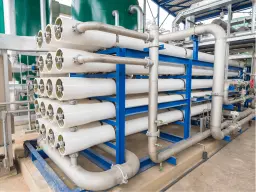
Reverse Osmosis
Semi‑permeable membranes operating at 12–25 bar reject up to 99 % of dissolved salts, silica, bacteria and organics, producing low‑conductivity permeate suited for high‑purity applications. RO systems for radiopharmaceutical use are often configured as double‑pass trains to achieve water that is equivalent to distillation.
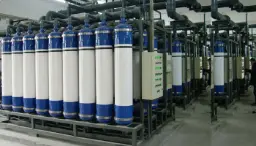
Ultrafiltration
Hollow‑fiber membranes with pore sizes below 0.01 µm remove colloids, endotoxins and high‑molecular‑weight organics that slip through RO and CEDI. Ultrafiltration polishing trains are critical for maintaining low pyrogen and bioburden levels in water for radiopharmaceutical formulation.
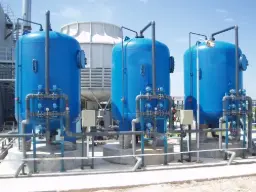
Water Softener
Cation‑exchange softeners replace calcium and magnesium ions with sodium to prevent scale formation on heat exchangers, stills and RO membranes. In medical isotopes manufacturing the softening resin is regenerated with sodium chloride and periodically sanitized to prevent microbial breakthrough.
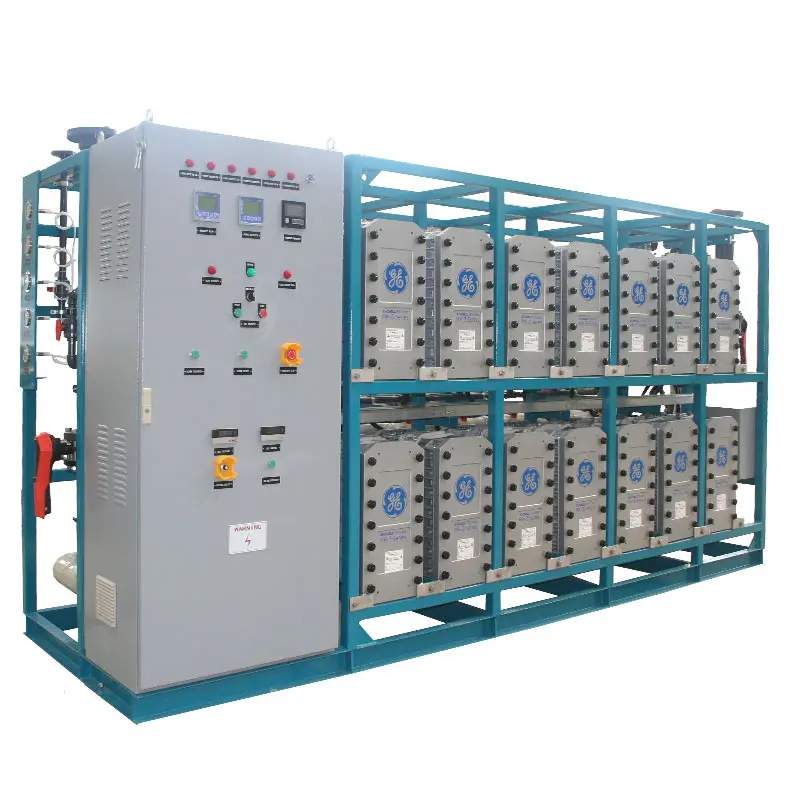
Electrodeionization
Continuous electrodeionization (CEDI) modules use ion‑exchange resins and electrical potential to remove residual ions without chemical regenerants. Combined with RO, CEDI delivers water with resistivity above 15 MΩ·cm and eliminates the need to handle acids and caustics on site.
The sequence of pre‑filtration, softening, RO, CEDI, ultrafiltration and final polishing ensures that every class of contaminant is addressed. Coarse filters and carbon beds extend the life of downstream membranes and resins by removing particulates and oxidants. Membrane processes like RO and ultrafiltration provide high rejection of ions, pyrogens and microorganisms without the need for distillation, while CEDI continuously polishes the water to a resistivity typically above 15 MΩ·cm. UV and ozone sanitization keep storage and distribution systems free of biofilm without introducing residual chemicals that could compromise radionuclide labeling reactions. Distillation remains the gold standard for WFI production, and some radiopharmacy facilities use small stills as a final barrier and as a validated backup to membrane systems. When these technologies are combined in a carefully designed sequence, the resulting water consistently meets compendial limits for conductivity, TOC and endotoxin, supporting reproducible radiopharmaceutical synthesis and compliance with regulatory expectations.
Key Water‑Quality Parameters Monitored
Maintaining water quality in radiopharmaceutical production requires continuous measurement and control of parameters that affect both chemical stability and patient safety. Conductivity is a primary indicator of ionic contamination; purified water leaving an RO and CEDI system typically has conductivity below 1.3 µS/cm at 25 °C, while WFI distribution loops are designed to operate at resistivity above 1 MΩ·cm. Online conductivity sensors with temperature compensation allow operators to detect membrane breaches or resin exhaustion in real time. Total organic carbon (TOC) monitoring is equally important because trace organics can catalyze radiolysis and reduce the radiochemical purity of PET and single‑photon tracers. TOC analyzers use ultraviolet oxidation and infrared detection to quantify organic carbon, and typical action limits for WFI are ≤ 0.5 mg/L. Microbial contamination poses a direct risk of pyrogen formation; action limits for WFI distribution are less than 10 CFU per 100 mL, and many facilities target even lower counts through continuous hot circulation at 70–80 °C and periodic sanitization. Endotoxins are lipopolysaccharides produced by Gram‑negative bacteria that can induce fever in patients; the limit for radiopharmaceuticals is usually 0.25 EU/mL, and routine Limulus amebocyte lysate tests verify compliance. Radioactivity in the water itself is typically negligible because purified water does not accumulate radionuclides, yet waste streams from cleaning steps may be held in decay tanks until isotopes have decayed to background levels.
Other parameters provide additional assurance that the water system is under control. Dissolved oxygen levels are monitored because oxygen influences radionuclide oxidation states and can accelerate degradation; membrane degassing is used to maintain dissolved oxygen below 0.5 mg/L when required. Silica, measured in µg/L, must be low to prevent deposition on RO membranes and to avoid forming insoluble silicates in labeling reactions. Hardness and alkalinity are checked at the pretreatment stage to determine softener dosing and antiscalant requirements. Operators also monitor pH (typically 5.0–7.0 for WFI), residual disinfectant (0 for WFI but controlled at 0.1–0.5 mg/L as free chlorine in feedwater) and temperature in hot loops. When any parameter drifts toward its action limit, corrective measures such as membrane replacement, resin regeneration or system sanitization are implemented to protect downstream processes. Trending data over weeks and months helps quality assurance teams correlate water quality excursions with variations in radiochemical yield or product sterility, making these metrics central to continuous improvement initiatives.
| Parameter | Typical Range | Control Method |
| Conductivity | ≤ 1.3 µS/cm at 25 °C in WFI distribution; purified water slightly higher | Online conductivity probes with alarm setpoints; routine calibration |
| Resistivity | ≥ 1 MΩ·cm for high‑purity systems (≈ 1 µS/cm) | Combination of RO, CEDI and polishing resins; monitor continuously |
| Total Organic Carbon (TOC) | ≤ 0.5 mg/L (500 ppb) | UV oxidation/IR detection analyzers; carbon prefiltration and sanitization |
| Microbial Count | < 10 CFU/100 mL for WFI; < 100 CFU/mL for purified water | Hot circulation at 70–80 °C, UV and ozone disinfection, regular sampling |
| Endotoxin | < 0.25 EU/mL | Limulus amebocyte lysate testing; ultrafiltration and sterile filtration |
| pH | 5.0–7.0 for WFI | Buffering by CO₂ removal; degassing and CEDI control |
| Silica | < 50 µg/L | Antiscalant dosing, membrane monitoring |
| Dissolved Oxygen | < 0.5 mg/L when required | Membrane degassing; nitrogen sparging |
| Hardness | < 1 mg/L as CaCO₃ after softening | Cation‑exchange softeners; periodic regeneration |
| Residual Disinfectant | 0 in WFI; 0.1–0.5 mg/L free chlorine in feedwater | Activated carbon adsorption; free‑chlorine analyzers |
Design & Implementation Considerations
Designing a water treatment system for radiopharmaceutical production involves aligning technological choices with regulatory and operational requirements. Facilities must comply with USP <825>, USP <823>, European Pharmacopoeia monographs and local GMP regulations, all of which stipulate specific microbiological and chemical limits for water. Early in the design phase, engineers evaluate the feedwater quality – hardness, TOC, microbial content and possible radionuclide contamination – to select appropriate pre‑treatment units. Redundancy is essential because radiopharmaceutical batches are time‑sensitive; double‑pass RO trains, parallel carbon beds and backup distillation units prevent unplanned downtime. Piping and storage tanks are typically constructed from 316L stainless steel with orbital welds, electro‑polished surfaces and minimal dead legs to prevent biofilm formation; in some installations, high‑performance plastics like PVDF are used in place of metals to avoid corrosion and extractables. Distribution loops are designed as continuous recirculating circuits with turbulent flow velocities of 1–3 m/s to discourage microbial attachment, and the loops may be maintained at elevated temperature (65–80 °C) for thermal sanitization.
Another key consideration is the integration of control and monitoring systems. Supervisory control and data acquisition (SCADA) platforms collect data from conductivity, TOC, flow and temperature sensors and display alarms when parameters deviate from setpoints. Because hot cells and synthesis modules may be shielded behind thick lead walls, remote operation is critical; automated valves, remote sample ports and online analyzers allow staff to manage the system without direct exposure to radiation. Installing sampling points at each branch of the distribution loop enables trending and validation. During commissioning, a rigorous qualification program – design qualification, installation qualification, operational qualification and performance qualification – verifies that the system meets design intent and regulatory expectations. For example, flushing and passivation of stainless steel circuits with citric acid or nitric acid remove rouge and prepare the surfaces for service; heat sanitization cycles are verified by thermal mapping to ensure all parts of the loop reach 80 °C for the specified dwell time. When designing for small‑batch PET tracer facilities, engineers may opt for pre‑packaged skids that combine RO, CEDI and ultrafiltration in a compact footprint and supply a small still as a final polishing step, balancing capital cost against the need for validated WFI. Ultimately, careful layout, material selection and automation provide the foundation for reliable water quality and regulatory compliance in radiopharmaceutical manufacturing.
Operation & Maintenance
Effective operation and maintenance keep water systems performing at their design specification and ensure consistent support for radioisotope synthesis. Operators perform routine checks on critical parameters using calibrated instruments and document results as part of the facility’s quality management system. Sampling from at least one point of use daily and all points weekly verifies microbiological control and supports trend analysis. Routine thermal sanitization involves recirculating hot water at 80 °C or higher for 30–60 minutes to eliminate biofilm; some facilities alternate between hot water, ozone injection and ultraviolet disinfection to prevent resistance. Cartridge filters and carbon beds are replaced based on pressure drop and breakthrough indicators, while softener resin is regenerated with brine and periodically sanitized. Reverse osmosis membranes require regular cleaning with acid or alkaline cleaners to remove scale and biofouling, and the cleaning cycle is optimized based on normalized permeate flow and differential pressure data. Continuous electrodeionization units are inspected for resin fouling and electrode scaling, and performance is restored by chemical flushing under manufacturer‑specified conditions.
Preventive maintenance extends beyond purification equipment. Storage tanks and distribution loops are inspected for rouge, corrosion and insulation integrity; valves and diaphragm seals are checked for leaks; and sensors are calibrated in accordance with manufacturer recommendations. Online TOC analyzers are calibrated with certified standards, and conductivity probes are verified using NIST‑traceable solutions. Operators also monitor control system alarms, trending patterns and deviations to detect early signs of membrane failure or microbial excursions. Deviations trigger corrective actions such as point‑of‑use filtration, increased sanitization frequency or root‑cause investigation. Wastewater containing radioactive residues from module cleaning is collected in shielded tanks until it decays below discharge limits and is then disposed of according to local regulations. Documentation of maintenance activities, sanitization cycles and test results is maintained for audits and product release decisions. By adhering to weekly testing, 0.5 mg/L TOC action limits and temperature setpoints such as 80 °C, facilities ensure that their water system remains capable of supporting safe and reproducible radiopharmaceutical production.
Challenges & Solutions
Problem: Radiopharmaceutical production facilities often face variations in feedwater quality that can lead to scaling, membrane fouling and inconsistent product quality. Seasonal changes in municipal water composition or deterioration of onsite wells introduce hardness, silica and microbial contamination that stress pretreatment units. Solution: Installing multimedia filtration, activated carbon and cation softening upstream of critical membranes mitigates these fluctuations and provides a buffer against feedwater spikes. Regular monitoring of feedwater hardness and alkalinity enables operators to adjust regenerant dosage or antiscalant feed to maintain membrane performance. In addition, redundant filter trains and proper pretreatment sizing allow one unit to be serviced while the other remains online, preventing downtime during critical radioisotope production windows. Incorporating chemical cleaning protocols and scheduling them based on normalized flux data ensures that scaling is addressed before it adversely affects water quality.
Problem: Maintaining sterility and pyrogen control in distribution loops is challenging because microbes can colonize dead legs, valve diaphragms or gasket surfaces. Solution: Designing distribution loops with continuous recirculation and smooth, crevice‑free interiors minimizes sites where biofilms can develop. Heat‑sanitized loops operate at 70–80 °C, which naturally suppresses microbial growth, while cold loops incorporate ultraviolet disinfection and ozone injection as continuous barriers. Regular sampling and endotoxin testing provide early detection of microbial ingress, and thermal sanitization cycles can be scheduled during periods of low production to avoid interrupting radionuclide synthesis. Installing double‑valve points of use and ensuring valves are flushed prior to use prevent contamination from non‑sterile air pockets. When contamination is detected, root‑cause analysis often reveals design flaws such as dead‑leg lengths exceeding three times the pipe diameter or improperly sloped piping; correcting these issues is more effective than repeated sanitization.
Problem: The presence of radioactivity adds unique challenges to water system operation because equipment may be located in hot cells where direct access is limited. Solution: Automation and remote monitoring are indispensable. Using SCADA systems with remote actuators and sample loops that bring water out of shielded enclosures reduces radiation exposure to personnel while allowing timely quality checks. Maintenance plans must account for radiation decay periods before opening equipment, and spare parts may need special handling and disposal procedures. Including radiation‑tolerant materials in the design – such as stainless steel, PTFE and quartz – extends the service life of components exposed to ionizing radiation. Cross‑contamination of water with radioactive isotopes is minimized by segregating waste streams from the main water loop and using dedicated cleaning equipment for hot cells. After use, radioactive wastewater is held in delay tanks until it reaches background activity, ensuring regulatory compliance with environmental discharge limits.
Problem: Balancing capital and operating costs with compliance requirements can be difficult, particularly for small hospital‑based PET centers. Solution: Modular water treatment skids combine RO, CEDI and ultrafiltration into compact packages that meet WFI requirements with lower upfront investment. These systems can be factory‑tested and pre‑validated to expedite installation and qualification. Coupling membrane processes with a small vapor‑compression still provides a validated fallback method and enhances regulatory confidence. Energy consumption can be reduced by recirculating water at moderate temperatures and using insulation to retain heat, while variable‑speed pumps match flow to demand and minimize power usage. Strategic planning around isotope production schedules allows facilities to schedule sanitization and maintenance during off‑peak periods, further optimizing operational costs.
Advantages & Disadvantages
Implementing comprehensive water treatment and conditioning for radiopharmaceutical production offers substantial benefits, but it also introduces complexities that must be weighed by facility managers. Advanced purification trains – incorporating reverse osmosis, continuous electrodeionization, ultrafiltration and polishing technologies – ensure the water meets stringent chemical and microbiological limits, directly supporting high yields and reproducible syntheses. With online analytics and automated controls, operators can quickly detect deviations and take corrective action, reducing the likelihood of batch failures and patient delays. The closed‑loop design and materials of construction protect against contamination and corrosion, while hot recirculation or advanced disinfection methods minimize bioburden without chemical residuals. Adhering to regulatory guidance from pharmacopeias and GMP frameworks fosters confidence among regulators and clinicians that radiopharmaceuticals are prepared safely. Moreover, by investing in robust water infrastructure, organizations build long‑term resilience against feedwater variability and unplanned downtime.
However, these systems come with drawbacks that must be managed. High capital costs for multi‑stage purification, thermal sanitization and automation may strain budgets, especially for smaller facilities. Energy consumption can be significant when maintaining recirculating loops at elevated temperatures, and the need for skilled personnel to operate and maintain complex equipment introduces ongoing expense. Regular monitoring, validation and documentation require disciplined attention to detail and may divert resources from core production activities. Distillation units produce pure water but also generate heat and noise, requiring additional utilities and space. Finally, the presence of radiation within certain areas complicates maintenance logistics and safety protocols. Weighing these pros and cons is critical when designing or upgrading a water system to ensure that it aligns with both regulatory obligations and operational realities.
| Advantage | Disadvantage |
| Reliable removal of ions, organics, microbes and pyrogens supports high radiochemical yield | High initial capital and installation cost for multi‑stage purification systems |
| Online monitoring and automated controls allow rapid detection and correction of deviations | Energy‑intensive hot recirculation increases operating costs |
| Compliance with GMP, USP and EP standards enhances regulatory acceptance | Complex systems require skilled operators and comprehensive documentation |
| Hot or ozone‑sanitized loops minimize bioburden without introducing chemical residuals | Maintenance in radiation areas necessitates remote handling and protective equipment |
| Modular skids and backup distillation provide flexibility and resilience | Space and utility requirements may be challenging for small facilities |
Frequently Asked Questions
Question: Why is water for injection preferred over purified water in radiopharmaceutical manufacturing?
Answer: Water for injection (WFI) undergoes additional purification and sterilization beyond purified water, ensuring extremely low levels of endotoxins and microbial contamination. In nuclear medicine, even trace levels of pyrogens can cause adverse reactions in patients and interfere with the chemistry of radionuclide labeling. WFI is distributed through sanitary piping under strict conditions and is often heated to maintain sterility, making it suitable for dissolving radioactive compounds and diluting final products intended for intravenous use.
Question: How is microbial contamination controlled in a radiopharmaceutical water system?
Answer: Microbial control relies on a combination of design, operation and monitoring. Distribution loops are engineered to avoid dead legs and maintain turbulent flow so bacteria cannot settle. Hot recirculation at temperatures between 70 °C and 80 °C suppresses microbial growth, while ultraviolet light and ozone provide continuous disinfection in cold systems. Regular sampling from multiple points, coupled with action limits such as < 10 CFU/100 mL for WFI, allow operators to detect contamination early and initiate cleaning or sanitization before it affects product quality.
Question: What role does total organic carbon (TOC) monitoring play in radiopharmaceutical production?
Answer: TOC monitoring quantifies the amount of carbon from organic compounds dissolved in water. Radiopharmaceutical syntheses often involve sensitive reactions with short‑lived radionuclides; organic impurities can quench radioactivity, alter oxidation states or act as competing ligands, thereby reducing labeling efficiency. Action limits typically require TOC levels at or below 0.5 mg/L, and online TOC analyzers provide early warning of carbon breakthrough from pretreatment units or biofilm growth. Maintaining low TOC helps protect the radiochemical purity and stability of final products.
Question: Are reverse osmosis systems sufficient on their own to produce water of injectable quality?
Answer: Reverse osmosis (RO) removes most dissolved salts and many organics, but it does not achieve sterile, pyrogen‑free water on its own. For radiopharmaceutical production, RO is usually combined with continuous electrodeionization, ultrafiltration and additional polishing steps. Some regulatory frameworks allow double‑pass RO followed by ultrafiltration as an alternative to distillation when validated to meet WFI requirements. Nonetheless, many facilities include a still as a final barrier or backup to ensure compliance and resilience.
Question: How often should water quality be tested in a radiopharmaceutical facility?
Answer: During routine operation, at least one point of use in a WFI system is sampled daily, and all points are sampled weekly to verify microbial quality and other parameters. Conductivity and TOC are monitored continuously with online sensors, while endotoxin testing is performed on a batch or periodic basis. Additional testing may be required after maintenance activities, system modifications or whenever data trends indicate a potential problem. Establishing a robust sampling plan aligned with regulatory expectations helps ensure that any deviation is detected promptly.
Question: What happens to water waste that has been in contact with radioactive materials?
Answer: Wastewater from cleaning synthesis modules and hot cells may contain low levels of radioactive isotopes. Regulations typically require that such water be collected in shielded decay tanks until the radioactivity has decayed to background levels. After decay, the water is tested to confirm it meets release criteria and is then discharged or further treated as required. Proper segregation of radioactive wastewater from the main water purification loop prevents cross‑contamination and ensures that the primary system remains free of radioactivity.
Question: Can small PET centers outsource their water supply instead of installing full purification systems?
Answer: Some facilities choose to purchase packaged WFI from certified suppliers, but this approach may introduce logistical challenges and cost issues. Bulk WFI must be stored under sanitary conditions and used promptly to avoid microbial growth, and transport containers can be difficult to decontaminate once brought into hot cells. Installing a compact purification skid with on‑site generation offers better control over water quality, eliminates dependence on deliveries and allows integration with automated synthesis modules. The choice depends on production volume, available space and regulatory considerations.
Calculation Example
To estimate the permeate flow rate of a reverse osmosis system used in radiopharmaceutical production, suppose the feed flow is 500 L/h and the unit operates at a recovery of 75 %. Using the simple recovery formula (Permeate Flow = Feed Flow × Recovery), the permeate flow equals 375 L/h.